Organizations in Canada tell Puma to end complicity in Israel’s violations of Palestinian rights

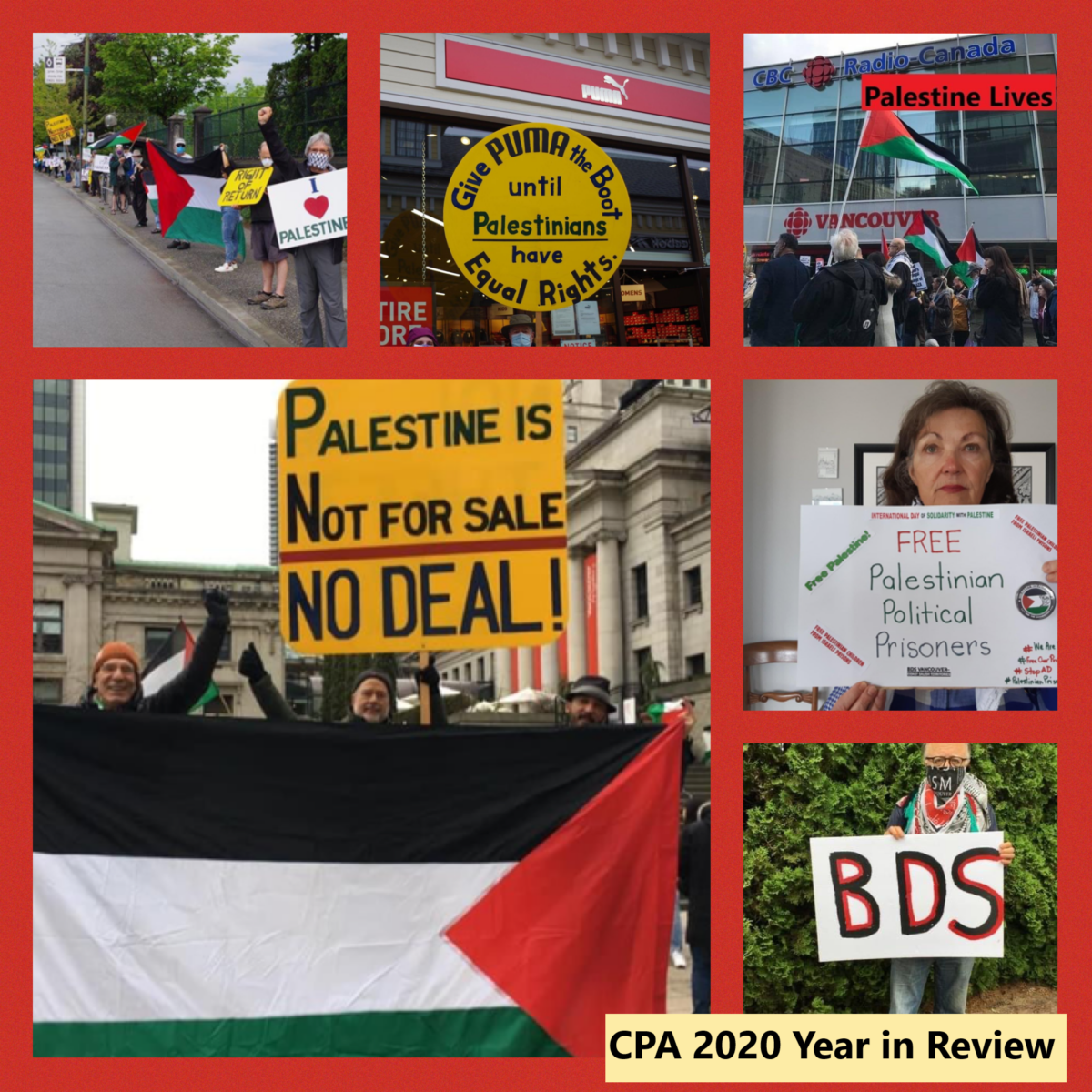
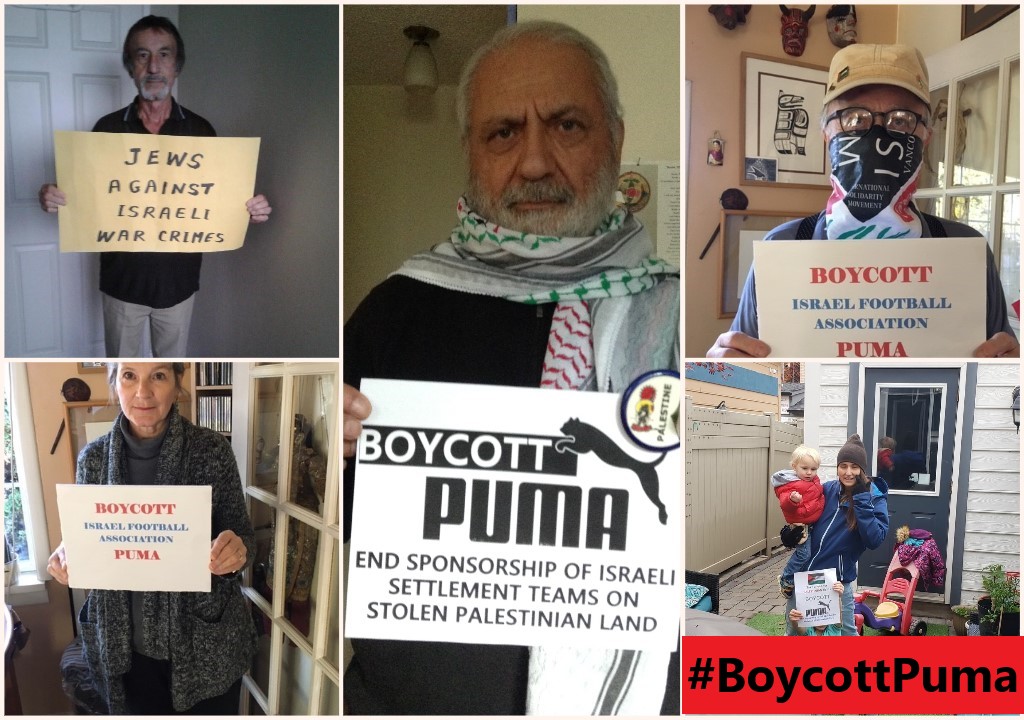
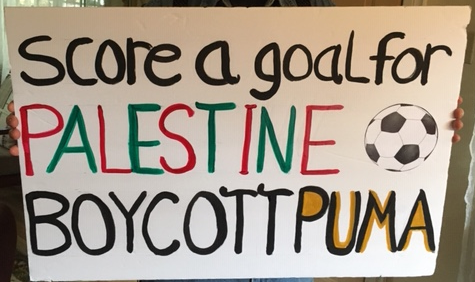
Check out the newest action in the #BoycottPuma – Give Puma the Boot campaign. Over twenty-five organizations in Canada, including unions, student associations and social justice groups, endorsed our letter to Puma calling on them to end their sponsorship of the Israel Football Association.
(le français suit)

December 9, 2020

Mr. Maguire, Senior VP, Canada
Mr. Philion, CEO, Puma North America

People in Canada have recently come together to send the message that we should all be concerned about Puma’s involvement in violations of international law and the legitimate rights of the Palestinian people. Folks from Vancouver to Calgary to Toronto have gone on social media to express their concerns and to say #BoycottPuma until it stops legitimizing Israeli apartheid.

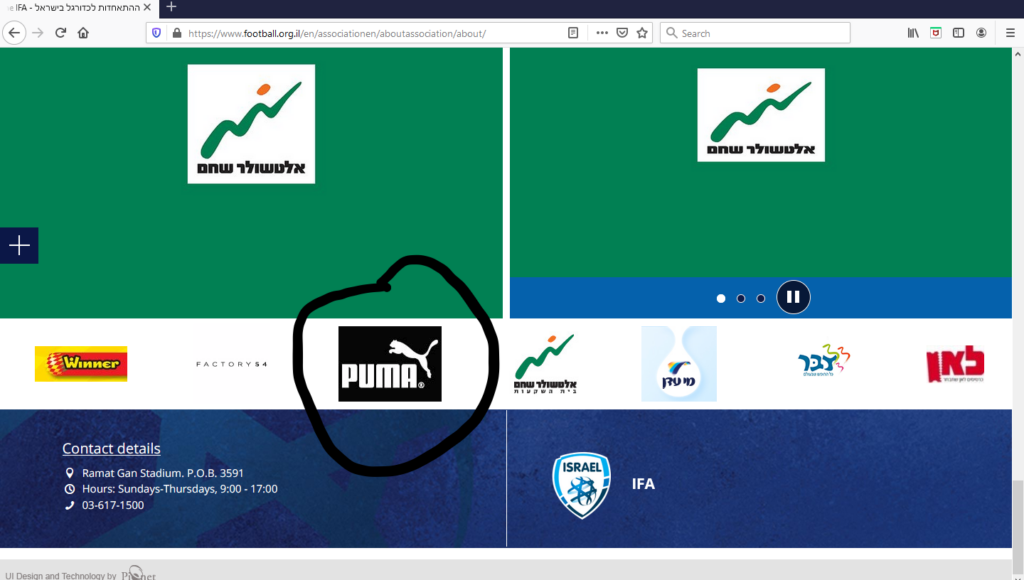
Why? Because Puma is the main sponsor of the Israel Football Association (IFA), which includes teams in Israel’s illegal settlements on occupied Palestinian land. In addition, Puma’s exclusive licensee in Israel is Delta Galil Industries, which has branches in those same illegal Israeli settlements.

We join with other consumers in Canada and around the world in letting you know that we will not purchase Puma products until the company stops these unethical practices, and until the Puma logo is no longer featured on the website for the Israel Football Association. The first sentence in your “Code of Conduct” is “Puma respects human rights”; we call on Puma to live up to that commitment.

Sincerely,
BDS Vancouver-Coast Salish
Canada Palestine Association

Endorsed by:
Canadian Union of Postal Workers CUPW-STTP
Vancouver & District Labour Council
Bayan Canada
BDS Québec
Canada Philippines Solidarity for Human Rights
Canadian BDS Coalition
CanPalNet (Canada-Palestine Support Network)
Independent Jewish Voices Vancouver
IJV Vancouver Youth Bloc
International League of Peoples’ Struggle ILPS Canada/Ligue internationale de lutte des peuples
Just Peace Advocates/Mouvement pour une Paix Juste
MidIslanders for Justice and Peace in the Middle East
Niagara Movement for Justice in Palestine-Israel (NMJPI)
Oakville Palestinian Rights Association OPRA
PAJU Palestinian and Jewish Unity/Palestiniens et Juifs unis
Palestine House (Palestinian Canadian Community Centre)
Palestine Solidarity Working Group-Sudbury
Palestinian Youth Movement – Toronto
Palestinian Youth Movement – Vancouver
Peace Alliance Winnipeg
Regina Peace Council
Samidoun Palestinian Prisoner Solidarity Network
Solidarity for Palestinian Human Rights – Queen’s University
Solidarity for Palestinian Human Rights-SPHR McMaster
Solidarity for Palestinian Human Rights – UBC
Students in Solidarity for Palestinian Human Rights McGill
Sulong UBC
University of Toronto Students Against Israeli Apartheid
Young Communist League Vancouver

____________________________________________

Monsieur Maguire, Vice-président senior, Canada
Monsieur Philion, PDG, Amérique du nord

De nombreuses personnes au Canada se sont récemment réunies pour signaler que nous devrions tous nous inquiéter de l’implication de Puma dans des violations du droit international et des droits légitimes du peuple palestinien. Des citoyens de Vancouver à Toronto, en passant par Calgary, ont utilisé les médias sociaux pour exprimer leurs inquiétudes et dire #BoycottPuma jusqu’à tant que l’entreprise cesse de légitimer l’apartheid israélien.

Pourquoi? Parce que Puma est le principal sponsor de l’Association israélienne de football (IFA), laquelle comprend des équipes dans les colonies illégales d’Israël situées sur les terres palestiniennes occupées. En outre, Delta Galil Industries, titulaire exclusif de la licence Puma en Israël, possède des succursales dans ces mêmes colonies israéliennes illégales.

Nous nous joignons à d’autres consommateurs au Canada et dans le monde pour vous informer que nous n’achèterons pas de produits Puma tant que votre entreprise n’aura pas mis fin à ses pratiques contraires à l’éthique, et tant que le logo de Puma restera affiché sur le site Web de l’Association israélienne de football. La première phrase de votre « Code de conduite » est : « Puma respecte les droits de la personne ». 

Nous appelons Puma à se montrer à la hauteur de cet engagement.

Cordialement,

BDS Vancouver-Coast Salish
Canada Palestine Association

Update – Puma responds, and we reply: Still Keeping Puma out of our Shopping Cart!


Appointing Irwin Cotler is the crown jewel in Canada’s anti-Palestinianism

by Marion Kawas

Pro-Palestine activists in Canada have been overloaded in the last few months with challenges surrounding the dangerous definition of Anti-Semitism promoted by the International Holocaust Remembrance Association IHRA.

First, Bill 168 in the Ontario legislature was set for committee hearings when the government hijacked the whole process by adopting the IHRA through an Order in Council. Then, just last week, the Trudeau government appointed none other than Irwin Cotler, a well-known pro-Israel advocate, as Canada’s Special Envoy for Holocaust Remembrance and Combatting Anti-Semitism. Cotler will also head Canada’s delegation to the IHRA and will work to “advance the implementation of this definition across the country and its adoption internationally.”

Clearly all appeals to rational dialogue over the chilling effects of adopting the IHRA have fallen on deaf ears. Canada’s largest province and its federal government have drawn the proverbial line in the sand. And activists now need to step up and intensify all of their other campaigns, from #StoptheJNF to #FreePoliticalPrisoners to BDS, as the most effective response.

Many academics and activists, be they Jewish, Palestinian or concerned supporters, have written scholarly and lucid articles on why the IHRA definition is flawed and confusing. It is very likely that pro-Israel advocates know full well the contradictions in this definition and that it would probably never stand up to a legal challenge. But that’s not the point. The point is that they have succeeded in not only defining and confining the parameters of pro-Palestine discourse, but have also successfully appointed themselves as the arbiters of what will constitute acceptable criticism of Israeli policies.

Shimon Koffler Fogel, CEO of the Centre for Israel and Jewish Affairs readily pointed out earlier this month that the IHRA definition notes that “criticism of Israel similar to that leveled against any other country cannot be regarded as antisemitic.” But who decides what criticism should be allowed or not? In Canada, it will now be Irwin Cotler, the man promoted by the Israeli media as “…one of the staunchest defenders that Israel has around the world”.

The man who PM Trudeau personally referenced when he publicly condemned the BDS movement. The man who sent his own submission to the International Criminal Court, arguing against an investigation into alleged Israeli war crimes in the occupied Palestinian territories. The Israeli newspaper Haaretz described him at the time this way: “Additional requests were submitted to the court by Irwin Cotler, a senior jurist and former justice minister of Canada who is considered very pro-Israel…”.

Surely, no-one with the slightest understanding of Middle East issues should expect Irwin Cotler to be anything other than anti-Palestinian and blatantly in favour of Israel in his new role. The Israeli media are abundantly clear on who he is and what he has stood for over the decades.

Last year, the Trump administration also appointed a Special Envoy to Combat Anti-Semitism, Elan Carr. Although Cotler and Carr come from vastly different backgrounds, both hold very similar views on what is considered “anti-Semitic behaviour”; both are intent in singling out the BDS movement and as Carr succinctly put it, consider “hostility to the State of Israel as the anti-Semitism of today”.

And then we have the infamous 11 accompanying IHRA examples. Woe to the less informed amongst us who tries to navigate what is acceptable or not. One example cites that “Holding Jews collectively responsible for actions of the state of Israel” is racist behaviour. I agree with that, but then what do we make of Israel’s Nation State law which openly declares that “The State of Israel is the nation state of the Jewish People”. How can most folks make sense of such contradictory declarations? They can’t and will probably end up concluding its better to say nothing and just avoid the issue altogether. Which seems to be the whole intent of the IHRA in the first place. If you can’t rationally convince most people that criticism of Israel is somehow anti-Semitic, then the next best thing is to just put a tight lid on the whole debate.

In fact, there are many examples of white supremacists that support Israel who consistently engage in anti-Jewish racism, but they are embraced by the current Israeli government. Why? Because it has become clear that is okay to be anti-Semitic as long as you’re pro-Israel. Which adds another dangerous layer to this whole affair, and seriously compromises the struggle against racism.

That struggle must also firmly acknowledge that Zionism is a form of racism, just as deadly as any other. For too long, progressive forces in Western countries have treated Zionism as a “lesser form” of racism, not as pernicious or aggressive. But this attitude is based mostly on an inherent bias against, and ignorance of, the lived experience of Palestinians; an attitude that has been exploited and manipulated for many years by both the Israel lobby and Western governments.

Adopting the IHRA definition is just one example of the attempts by those governments to shield Israel from criticism and divert attention from its war crimes, apartheid policies and racism against the Palestinian people. This process dehumanizes the Palestinian people by denying their existence, their culture and their narrative; it also criminalises any Palestinian for even talking about their memories and experiences. This amounts to institutional racism against a whole nation and its people.    

Activists in Canada need to re-assess strategy going forward. Trudeau’s appointment of Irwin Cotler is a turning point, a watershed moment, a blatant rebuke of any sense of a fair-handed approach by the Canadian government to the Palestinian cause. And it must be responded to for what it is, a slap in the face for all those who believe in peace with justice for Palestine.

(Photo from protest against Irwin Cotler’s Speech, Montreal, June 2019)

Another version of this article appeared in Mondoweiss.

Canada’s anti-Palestinianism on display again at UN

And here we go again. Canada voted just this week to continue its “proud tradition” at the United Nations in favour of Israeli illegal settlements, war crimes and apartheid. Out of seven resolutions at the UN Fourth Committee, Canada voted against five and abstained on two.

Details on how Canada voted at the Fourth Committee:

1. “Assistance to Palestine refugees” [A/C.4/75/L.9]: Adopted by a vote of 153 in favour – 2 against – 12 abstention including Canada.

2. “Operations of the United Nations Relief and Works Agency for Palestine Refugees in the Near East” [A/C.4/75/L.10]: Adopted by a vote of 151 in favour – 5 against including Canada – 9 abstention.

3. “Palestine refugees’ properties and their revenues” [A/C.4/75/L.11]: Adopted by a vote of 151 in favour – 6 against including Canada – 8 abstention.

4. “Work of the Special Committee to Investigate Israeli Practices Affecting the Human Rights of the Palestinian People and Other Arabs of the Occupied Territories” [A/C.4/75/L.12]: Adopted by a vote of 72 in favour – 13 against including Canada – 76 abstention.

5. “Israeli settlements in the Occupied Palestinian Territory, including East Jerusalem, and the occupied Syrian Golan” [A/C.4/75/L.13]: Adopted by a vote of 142 in favour – 7 against including Canada – 13 abstention.

6. “Israeli practices affecting the human rights of the Palestinian people in the Occupied Palestinian Territory, including East Jerusalem” [A/C.4/75/L.14]: Adopted by a vote of 138 in favour – 9 against including Canada – 16 abstention.

7. “The occupied Syrian Golan” [A/C.4/75/L.15]: Adopted by a vote of 142 in favour – 2 against – 19 abstention including Canada.

Its wrong to legitimize supporters of Israeli militarism!

It pains Palestinian activists that even now, in 2020, we are forced to call out our allies on dealing with defenders of Israeli apartheid. Several organizations are having a webinar on October 15th about the important subject of why the Canadian government is insisting on spending billions of dollars on buying new fighter jets. The initial event announcement showed several speakers including Paul Manly, MP and Leah Gazan, MP along with other prominent figures. Canada Palestine Association was shocked to discover on October 9 that the name of Randall Garrison, NDP MP on Vancouver Island, was added to the line-up.

Why is Randall Garrison being included on this panel? He has a well-documented history of anti-Palestinian behaviour and his statements on the fighter jets have been uninspiring at best. Simply because of his position as NDP defense critic? Why bestow a “progressive” cover to a politician that is openly supporting Israel’s aggressions against the Palestinian people?

For those not familiar with Garrison’s history on the Palestinian issue, a simple internet search will bring up a mountain of information. He is vice-chair of the Canada Israel Interparliamentary Group, he reposts articles and statements that denounce BDS and call it anti-Semitic, he retweets posts from the Israel Defense Forces, and he is probably considered the most pro-Israel of all of the sitting NDP MPs.

But lets look at Randall Garrison’s public statements on the issue of Canada purchasing new warplanes. He made an official statement over a year ago saying that whatever jet was chosen should be a Made-in-Canada option and have a priority on Arctic capabilities. There was no criticism of the idea of getting new jets, just that they should be made here and contribute to the Canadian economy. The same sentiment was repeated just last month in an interview in Canadian Defence Review, where he also rejected the need for defense spending cuts despite the pandemic.

Some reports have suggested that an alternative to the new warplanes could be armed drones, and one of the main competitors for Canada’s new drones is ‘Team Artemis’, a partnership between MAS, a subsidiary of L3Harris Technologies, and Israel Aerospace Industries (IAI). The actual drone would be a “Canadianized” version of the IAI Heron TP drone. And according to Canadian Defence Review, “the Artemis’ Heron TP platform is mission-proven. The Israeli Air Force (IAF) has flown the Heron TP UAV for tens of thousands of hours since 2010 and it has been operated extensively under combat conditions.” To decode, that means it has been tested on Palestinians and Arabs, especially in Gaza, Lebanon and Syria.

So perhaps that’s something Randall Garrison might favour – an Israeli drone, the production of which will be done in Canada and also meets criteria for operating in the Arctic. That would certainly check all the boxes for our pro-Israel NDP Defense Critic.

A discussion on why militarism is wrong cannot be conducted with a speaker that is himself an advocate of Canadian militarism, and cheering for Israeli militarism that regularly kills and wounds Palestinian civilians. A speaker that refused to sign a simple pledge against Israeli annexation. A speaker that helps chair a parliamentary group that “works alongside the Centre for Israel and Jewish Affairs (CIJA) and the Canadian Jewish Political Affairs Committee (CJPAC) to host lobbying events on Parliament Hill.”

Canada Palestine Association tried unsuccessfully to convince the organizers of the event to not include Randall Garrison on their platform. We now call publicly on solidarity groups who have endorsed this event to withdraw their names as endorsers and reject any association with this legitimization of a supporter of Israeli apartheid.

It should not be incumbent upon the victims of Israeli colonial violence to always have to point out these glaring contradictions. Contradictions that should never occur in the first place by genuine progressives and internationalists. This is not a burden we should be expected to carry any longer.

Another version of this article appeared on Mondoweiss under the title: The glass ceiling for Palestinian rights

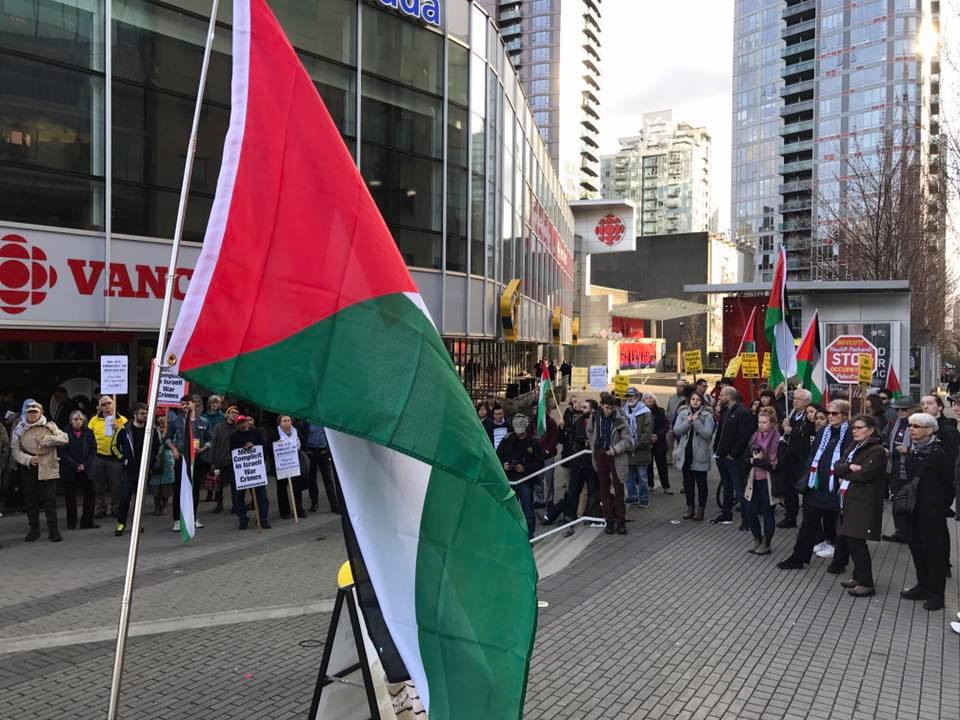
CBC Insists on Erasing Palestinian National Identity

The following letter was sent on September 10, 2020 to the CBC Ombudsman requesting an official review of CBC’s flawed explanation of its language guide on Palestine. The Ombudsman has already confirmed that the review will happen, noting the results will be made public on his website.

Dear Mr. Jack Nagler,
CBC Ombudsman

We have received the more detailed reply regarding CBC’s language guide on Palestine from Paul Hambleton, Director of Journalism Standards. We understand many people received a very similar response with identical points defending CBC’s insistence on not using the word “Palestine” except in very rare circumstances (i.e. part of a name). Even in that, CBC management could not adhere to its own policy when Mr. Hambleton referred to the Palestinian Liberation Organization rather than the Palestine Liberation Organization in his reply.

We are not satisfied with this response and are requesting the Ombudsman Office to launch a review of this case.
Frankly, the more CBC explains this biased policy the more convoluted their verbal gymnastics seem to become. They have now shed more light on the relevant clause that started the whole fiasco and led to The Current apologizing on air for referring to Palestine, rather than the Palestinian territories. The full clause has fastidious detailing of when not to use the word Palestine; one cannot refer even to pro-Palestine supporters, they can only be pro-Palestinian. And when referring to historic Palestine, one must use the term “British Palestine” if talking about the period of British colonial rule after WW1.

Even if one puts aside CBC’s argument on Palestine not yet being a “sovereign country”, why this obsession with removing any usage of the word Palestine in nearly all other contexts, including generic or historic ones? The “British Palestine” reference seems particularly ridiculous and archaic in post-colonial times.

Here are some documented historic facts:
a. In 1896, the founder of Zionism, Theodor Herzl wrote in his book “The Jewish State”: “In Palestine (our emphasis) … we shall be for Europe a part of the wall against Asia, we shall serve as a vanguard of civilization against barbarism.”
b. In 1897, the First Zionist Congress listed as some of the aims of the movement: “Zionism strives to create for the Jewish people a homeland in Palestine (our emphasis) secured by public law. The congress contemplates the following means to the attainment of this end:
The promotion on suitable lines of the colonization of Palestine (our emphasis) by Jewish agricultural and industrial workers…”
c. The British Balfour Declaration that adopted and legitimized Zionism stated: “His Majesty’s government view with favour the establishment in Palestine (our emphasis) of a national home for the Jewish people…”
As demonstrated, Palestine existed and was referenced as such before and during the colonial British Mandate on Palestine, the official name of which explicitly recognized Palestine. For CBC to claim that it should now be referred to only as “British Palestine” is not just dishonest, misleading and a fabrication of history, it also adopts the narrative of the Zionist movement that denies the existence of Palestine and its people.

As CBC seems to fully understand that language is an important component of defining issues, we assume that they also understand that their policy makes them complicit in trying to eradicate Palestine’s national identity. This has long been a pillar of the Zionist project, which goes to great lengths to ensure that the Palestinian struggle is not framed as a national struggle against settler-colonialism.

Mr. Hambleton stated: “We think it would be misleading to state or imply that “Palestine” is a sovereign country (which is substantially different from having “non-member observer status” at the United Nations). We also think it would be inappropriate for the CBC to unilaterally declare that Palestine suddenly exists (where are its negotiated borders?)…”

We should inform CBC that Israel has never officially demarcated its “borders” (negotiated or non-negotiated), so by this logic, it is inappropriate for CBC to use the term Israel.

Although CBC does state the term “occupied territories” is preferred to “disputed territories”, most of their language guide nonetheless refuses to frame the Palestinian and Arab struggles as national ones against a foreign occupying power. The language guides also notes, after acknowledging that the Golan Heights is “occupied territory”, that this is territory “which Israel and Syria are at odds over”. “At odds over” – really? This is not the kind of precise language that Mr. Hambleton repeatedly insists CBC wants to use when reporting on these issues. The Golan Heights is not only occupied territory, it is also illegally annexed territory, and should not be represented as a “territorial squabble”.

In response to our question on how this language guide was developed, Mr. Hambleton stated that amongst other criteria, it was based “on research and interviews conducted by CBC foreign correspondents (including interviews with Israeli and Palestinian experts inside and outside the Middle East)”. He does not specify which “Palestinian experts” were interviewed or if they were even Palestinian. We would like him to clarify who these experts are because we seriously doubt any Palestinian or knowledgeable objective expert on Palestine and its history would have agreed to such restrictions on referencing the Palestinian national struggle.

It is interesting to compare CBC’s approach to language around Kosovo. Although each situation is unique, surely there are universal principles that should guide CBC’s policies. Kosovo is not a member of the United Nations in any capacity, it is recognized by fewer countries in the world than the state of Palestine, yet CBC is happy to use the proper term Kosovo in its reporting. The only difference we can see is that the Canadian government has officially recognized Kosovo, but not Palestine. Although CBC’s mandate states it has administrative and programming independence from the Canadian government, this doesn’t seem to be the case. Their website states: “This principle of ‘arm’s length’ relationship between the CBC and government is critical to the Corporation’s independence.” This “arm’s length relationship” doesn’t seem to have held up well. Shouldn’t we just acknowledge that our national broadcaster implements the foreign policy of successive Canadian governments in its reporting? A foreign policy that resulted in Canada twice losing out on a seat at the UN Security Council, a foreign policy that desperately is in need of a review, a foreign policy that has isolated Canada internationally. CBC could better serve people in Canada by discussing these issues rather than just simply reflecting the defunct foreign policy of the day.

Finally, we strongly believe that CBC is promoting the Zionist narrative, and the official Canadian position in support of that narrative; in doing so, this makes CBC complicit in the dispossession and genocide of a whole nation and its people. It is a sad and supreme irony that the program in which CBC enforced these biased policies and denied the existence of Palestine was titled “the themes of colonialism and resource extraction”.

Regards,
Hanna Kawas, Chair
Canada Palestine Association

Updated article in Canadian Dimension: CBC Doubles Down on Erasing Palestine