This article first appeared in PalestineChronicle.com.
By Marion Kawas
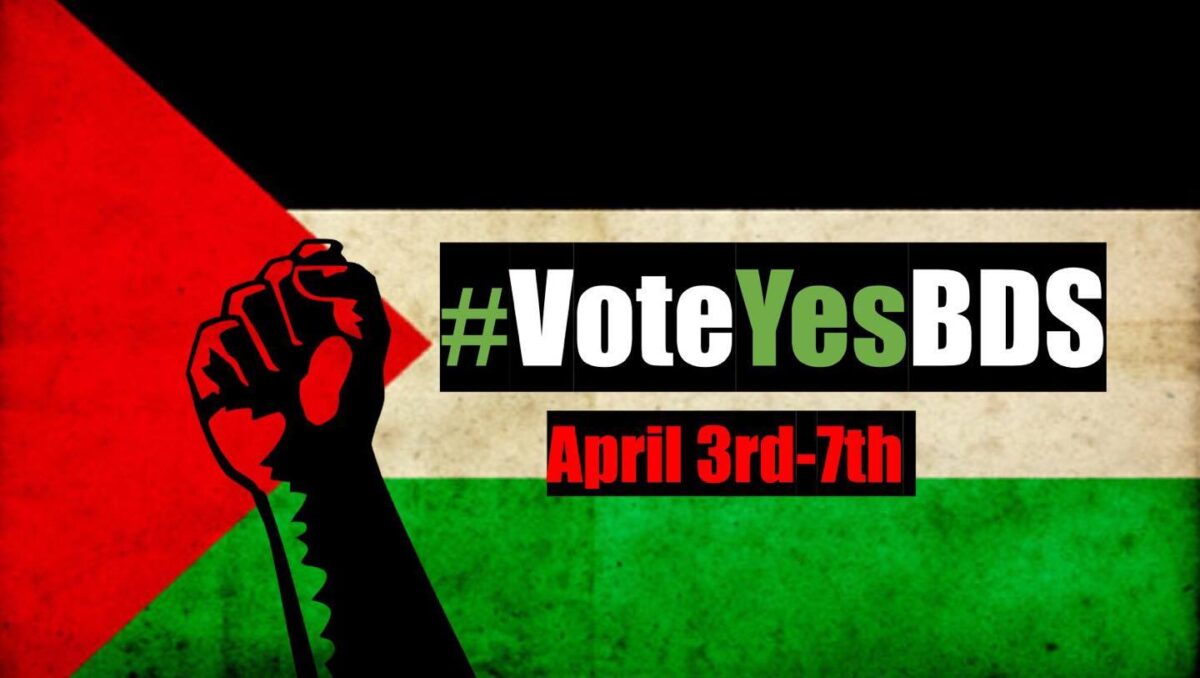
The challenges faced by the students of Solidarity for Palestinian Human Rights SPHR and the YestoBDS campaign at the University of British Columbia (UBC) in recent months serve as a template for what to expect from pro-Israel groups on campuses.
The ultimate end result was that the BDS referendum did not pass this year at UBC, although the students won an earlier landmark and (perhaps more significant) victory from the BC Supreme Court that dismissed a challenge to suppress the vote altogether.
Zionist groups have all now joined in the same chorus that the final vote count shows that BDS is “nefarious”, “divisive” and “promotes hate”.
I would suggest a different analysis, that the referendum results simply show us how much more ruthless, underhanded and aggressive the pro-Israel lobby have become around BDS, particularly at universities.
Israeli apologists constantly repeat the mantra that BDS creates a toxic and divisive environment on campus, but really, who is driving that toxicity?
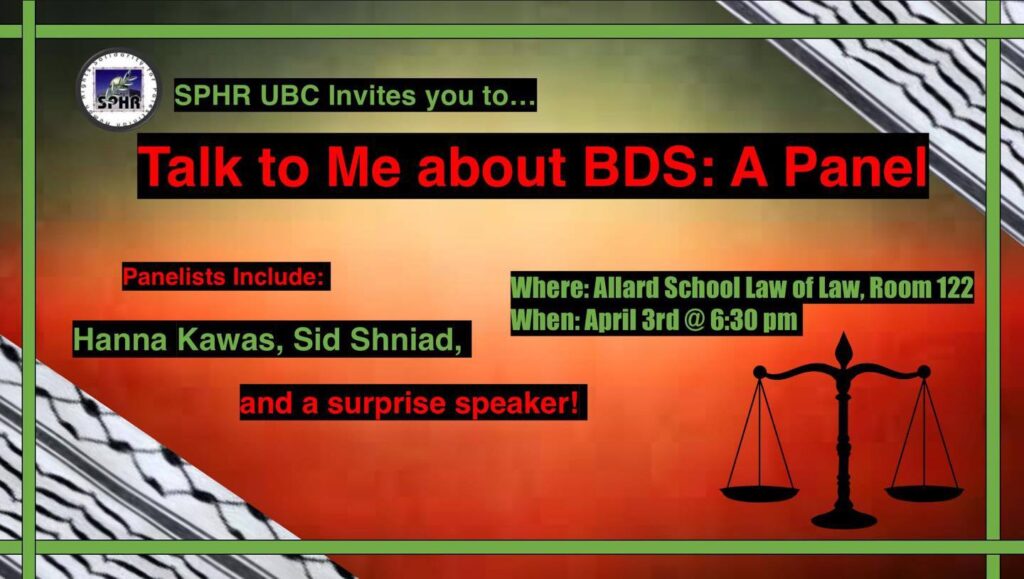
After following the debates on both print and social media at UBC during the referendum, and personally witnessing the horrific verbal abuse (that could easily have escalated into physical abuse) and disruption from the “Jewish Defense League” at a BDS panel on April 3, I have come to the conclusion that part of the strategy by pro-Israel groups is to manufacture this “toxic” environment so that student unions will be hesitant to deal with the issue.
As SPHR-UBC noted in their statement following the vote, the court case and the delays in being able to campaign (especially for a volunteer student group in the final week of term) severely hindered their efficacy. They summed it up this way:
“We started this campaign knowing the odds were against us: we only had a week to campaign, the delay was caused by a legal battle that had drained our efforts already, we had limited resources compared to our opposition, and we knew it would be hard.
“Regardless, we managed to start important conversations and the outcome of the vote shows that in better circumstances we could actually make it, and we commit to keep this conversation going on campus. It’s a shame that so few students had the opportunity to be aware of the referendum due to the constraints of limited campaign time.”
There were also reports that the AMS Student Union did not send out an email to all students notifying them of the online BDS referendum, even though it was an official AMS referendum that had met all the necessary criteria and email notices had been sent 2 years prior during the first BDS vote.
Further, the AMS Code of Procedure specifically states on page 128 that for online voting:
“1. The Elections Committee shall ensure that all Active Members have an opportunity to vote and shall establish staffed information booths and take other measures to publicize the election or referendum so as to ensure that as many Active Members as possible do vote.”
Clearly this did not happen as shown by the very low voter turnout; we have to ask why? Given the hectic nature of the last week of classes, and the imbalance in resources, this AMS lack of publicity may have been critical.
From the “Hillel student that went to court” to the Bnai Brith smear campaign to the JDL thuggery – the pro-Israel lobby groups were all on the same trajectory. Make the subject so contentious, so onerous, so costly that many students will not want to take it on.
And make sure that even if you can’t convince people of the rightness of your position, the issue will be considered too “hot to handle”. As Gilad Erdan, the Israeli Minister of Strategic Affairs, said over a year ago – “Soon every BDS activist will know that he will pay a price for this.”
And given developments in the past few months, we take him at this word. If you’re of Palestinian descent, the new travel ban means you might not be able to return to see your family if you are publicly active around BDS. Or the JDL will physically assault you, as happened in Washington DC to Kamal Nayfeh, who required 19 stitches for an eye injury. Or you will be falsely linked with alleged “terrorist” groups, and your photo spread across Zionist websites for simply wearing a symbolic Palestinian scarf, as happened at UBC.
We are deeply moved that in the face of such blatant and aggressive tactics, the students at UBC were not intimidated and carried on with their YestoBDS campaign. More than that, they pledged to continue the struggle by saying:
“We will keep standing up for human rights, even in the face of hateful misinformation and intimidation. We will keep giving space to the voices of Palestinians, in the name of freedom, justice and equality.”
And this is the real victory for BDS – that despite facing the full force of what can only be called the “BDS busting” machine, these students stood their ground and insisted to speak up for Palestinian rights, and scored a precedent-setting legal decision in the BC Supreme Court at the same time.
An educational event preceded the referendum:
SPHR Presents: BDS Panel Discussion