All out for Fedayeen Football

Palestinian activists working in the imperial core travel a difficult … Read more

Palestinian activists working in the imperial core travel a difficult road – full of betrayals, gaslighting and outright repression. Political struggle truly committed to the liberation principles of the right of return and the right to armed resistance, is neither easily understood nor acknowledged. How many times have such activists been labelled divisive or extremist, how many times has that previously supportive politician suddenly distanced themselves, and how many times has it required the witness of a celebrity or a ”more respectable” source to verify what has been said and documented a hundred times over by Palestinians.

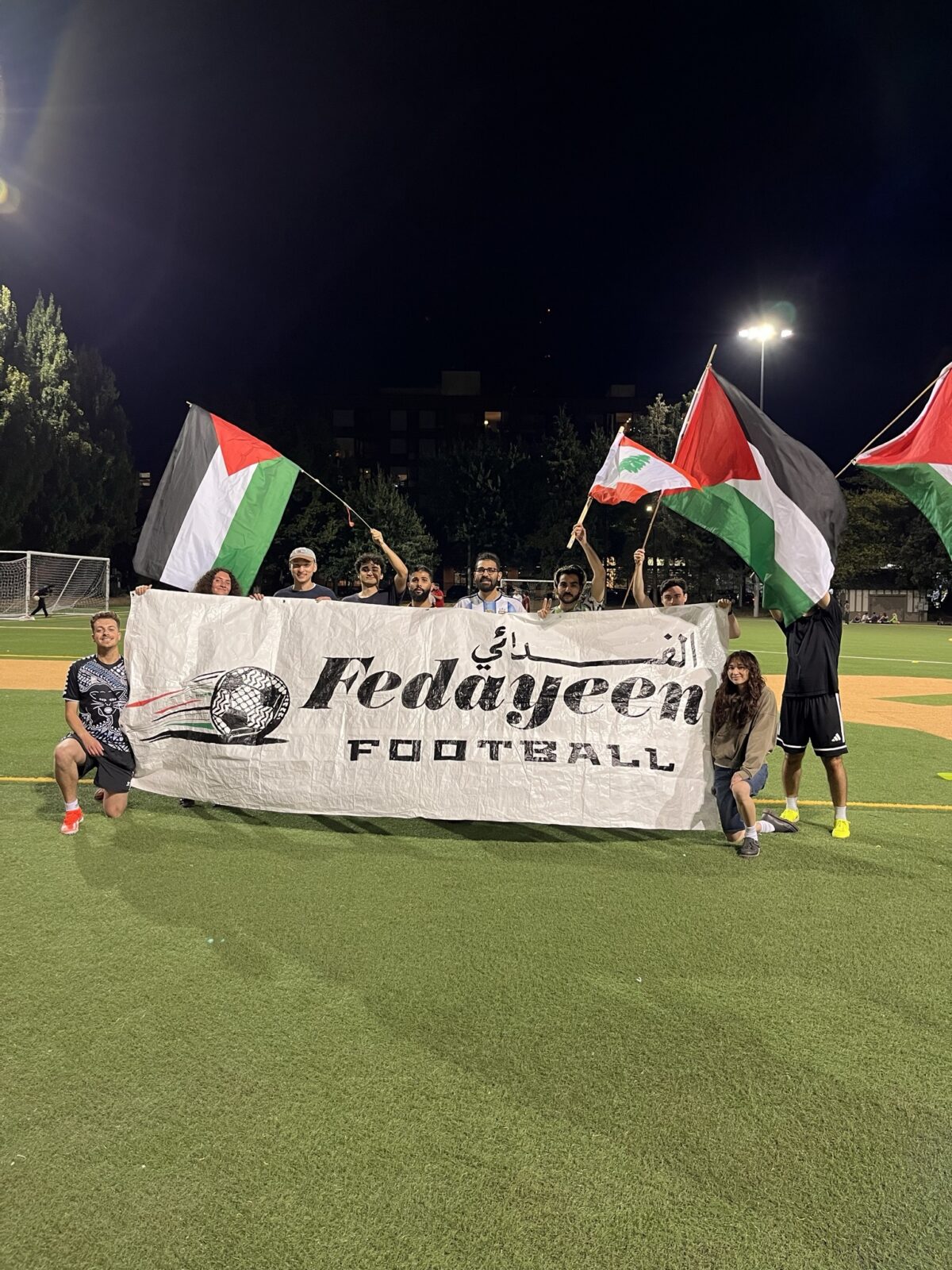
That is why the Fedayeen Football league that came to the West Coast this summer is a welcome break – it combines like-minded activists with community building, and all in a challenge to the policies of big sports and FIFA. Groups in Vancouver and Seattle, both FIFA host cities, have embraced the league.

In Vancouver, the most recent game on July 11 aimed to bring “football back to the people” along with fundraising for the Palestine Sports Network that does programs for kids in refugee camps in Lebanon and Gaza. It brought together a diverse crowd of supporters, young and old, from multiple communities. It had a clear sense of political purpose but also gave attendees that feeling of community that is crucial to building long-term solidarity work.

This was Vancouver’s second event and along with the football games, it featured a literature and merchandise table and a raffle with prizes donated by local businesses and supporters. It was a respite from the heightened police repression that has occurred in the city during the official FIFA hosting, most recently at protests against the visit of Marcos Jr. (not that the Vancouver police need an excuse to go after protestors, especially pro-Palestinian or anti-imperialist ones).

As Lawrence from Vancouver noted: “I see the Fedayeen Football League as not just a good vehicle for this community building and for publicizing the Palestine Sports Network’s campaigns, but as part of the foundation for building a revolutionary youth and people with iron determination and strength to truly break the chains of imperialism from within.”

Andreas from the Seattle area said that they have been doing almost weekly games for 2 months and now faced “Zionist hate articles demanding we aren’t allowed to use parks in the city of Seattle. Describing us as ‘terrorists who glorify violence’, I even received a message from city of Seattle parks and rec on instagram that we should use permits going forward when we advertise events.”

He added: “Football is the most popular sport in the world and we’re reclaiming it. This is why we did the peoples game before the Iran Egypt game.”

And in the New York/New Jersey area, their July 18 “Futbol Final” callout says: “We demand the zionist entity out of FIFA now, and refuse FIFA’s complicity in genocide!”

As Lawrence concluded: “The World Cup has become a circus and a venue for the most ostentatious displays of wealth, power and abundance while so many around the world who love the game are starved, killed, maimed, and dispossessed for the sake of that wealth and power. Taking it back, rather than leaving it to be monopolized by our enemies, is one of the most important tasks our generation must take on.”

Our role as solidarity activists should be to support what the Palestinian resistance groups on the ground have called for, not to advise or rebrand their objectives. To acknowledge that the Palestinians (and most global south struggles) have far more experience and understanding in strategy and tactics in general, and certainly for their own conditions in specific.

Armed struggle is not only legitimate but necessary. That is the reality; it should not only be recognized as a core principle in the Palestinian struggle, but further its pivotal role in keeping that struggle alive should be saluted.

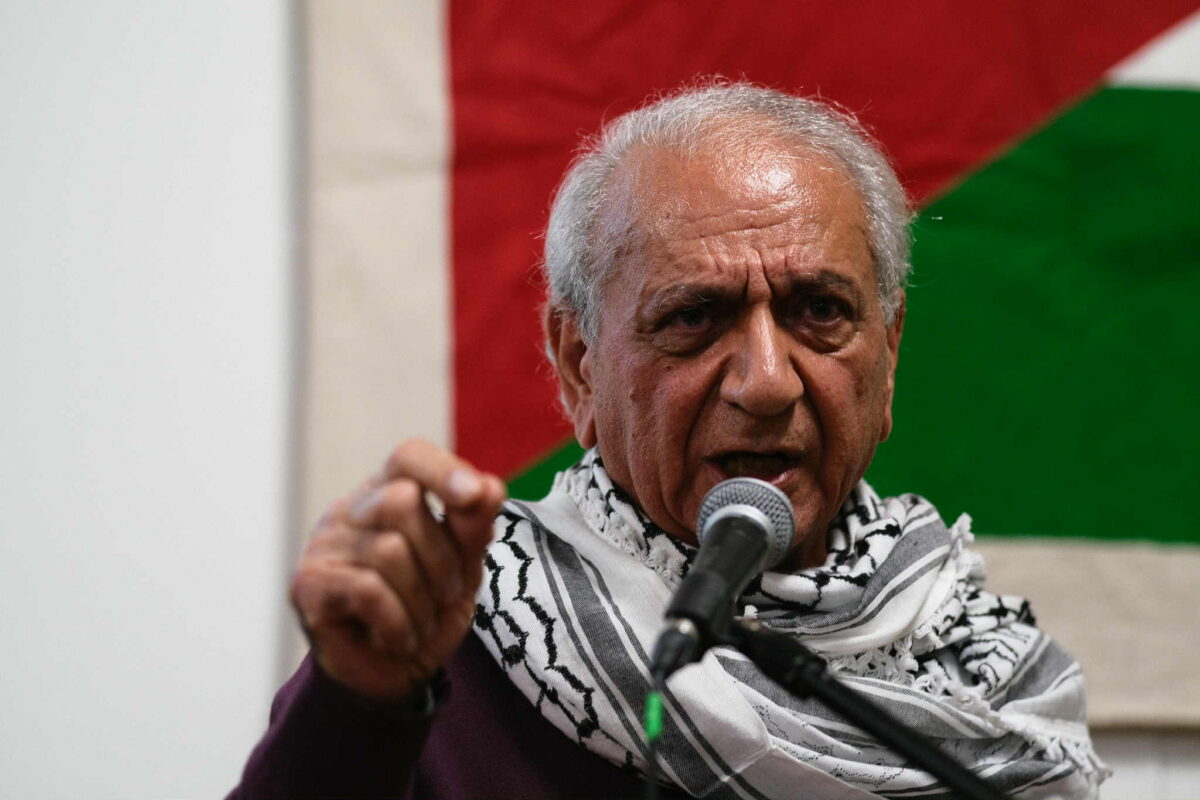
As noted by Hanna Kawas, chair of Canada Palestine Association who came out to the July 11 Fedayeen Football: “Any talk of disarming the resistance, either here in the belly of the beast or back home in Palestine, Lebanon or more recently Iraq, is an act of treason to the sacred cause of liberation, to the people and their struggles.”

Support for armed resistance is the new fault line. Here in the imperial core, our job is to help the solidarity movement understand that Palestinians are not a charity case, that we defend the armed resistance and that the cause of Palestine is championed through principles, not opportunism.

By Marion Kawas
Published in Al Mayadeen English, July 17 Fedayeen Football League | Al Mayadeen English

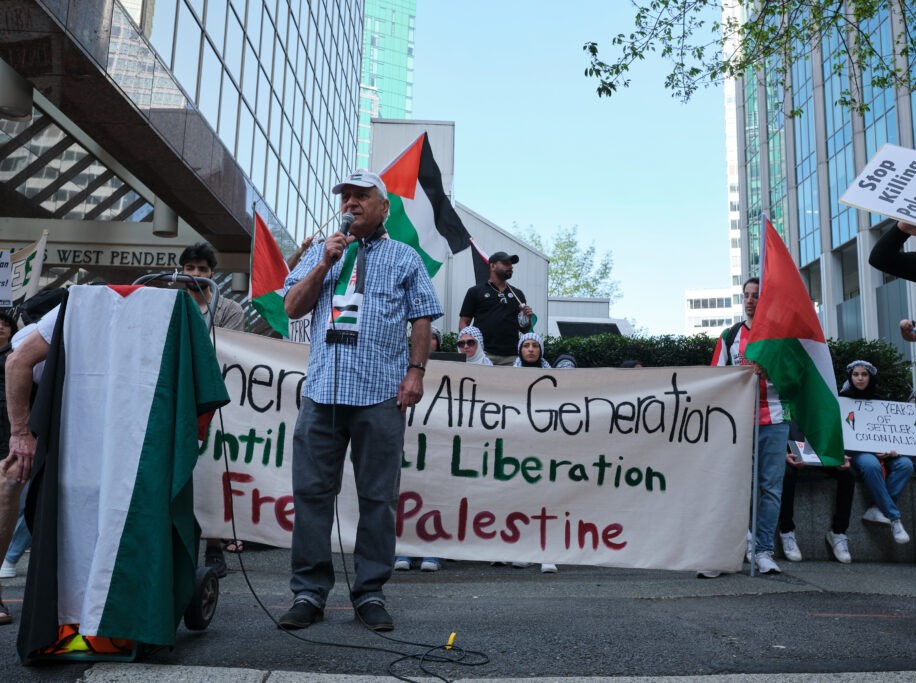
Land Acknowledgement on Nakba Day, From Turtle Island to Palestine

Today, I offer an Indigenous land acknowledgement on the unceded homelands of the Hunquminum speaking peoples of the Musqueam, Tsleil-Waututh, and Squamish nations of Turtle Island, where we have the duty as educators of learning and unlearning the truth’s and the untruth’s; the colonial history that was written down and taught to generations of settlers through the lens of the colonizer and the oppressor. Our education system, shaped by historical colonial frameworks, has played a significant role in the ongoing harm experienced by Indigenous Peoples across Turtle Island. Through residential schools, through genocide denialism and through hidden micro aggressions in our current structures, and we must do what we can within the system to create change for the betterment of every child.

I also want to recognize my ancestors and the rich cultural diversity of my family. My patriarchal lineage is Palestinian, and I am indigenous to Palestine. I can trace back my heritage through both my grandparents to the town of Bethlehem (or Beit Lahm in Arabic) where we still have our extended relatives living to this day.  We are of Christian Palestinian Heritage and our roots in the city go back to the original followers of Jesus. My last name, Kawas, holds significant meaning and literally means “sceptre carrier” and my father was a Boy Scout monitor in the Church of the Nativity as a teenager. Nonetheless, to this day, my family isn’t allowed to return to live in our ancestral family house, a house to which my father has the deeded title to.

My matriarchal lineage is Ukrainian and British. My Ukrainian grandfather grew up in the small town of Arbakka, Manitoba, served in WWII for Canada and lived in Ottawa, Ontario most of his life where he was an English teacher.

The Palestinian culture and teachings of being connected with the land, similar to those teachings across Turtle Island, is the heritage that I relate with most deeply as my paternal grandmother (my Sitti in Arabic) helped raise me when I was a child. Yet she did not have an easy life. She was a survivor of the initial forced expulsion, colonization and genocide of the Palestinian people in 1948, where she was living in Jaffa at the time. She was pregnant with my father and was forced to flee on foot, while gun shots rained above her head, back to Bethlehem, to the safety of her family.

Today, May 15, marks the anniversary of that initial forced expulsion – the day that the state of Israel was created. Palestinians call this day The Nakba, which translates to the great catastrophe. Bethlehem remained under Jordanian control until 1967, when Israel occupied the West Bank and my grandfather was forcibly separated from his family while working in Jordan. Indigenous peoples know all too well the pain of family separation. My father, being the eldest boy, at 19 years of age was made to cross the Allenby Bridge, the crossing between Jordan and the West Bank, to go and help figure out what the family should do. That was the last time my father ever saw his homeland. This incident would be a defining moment in his life that would shape who he would become; a fierce advocate for human rights and anti-colonial resistance for Palestinians and other marginalized communities, including the indigenous people of Turtle Island.

As an elder in the Palestinian community in Vancouver, my father was gifted an eagle feather by the matriarchs of the Downtown Eastside Womens Centre. This precious gift, which he refers to as “his visa to this place” symbolizes the shared bonds of trauma, the shared resistance to settler colonialism and the enduring spirit of defending the land. The late indigenous writer and poet Lee Maracle was a family friend and spoke many times of her great affinity with the Palestinian people. She even appeared on stage with the late Palestinian poet Mahmoud Darwish in 1976 at a public meeting in Vancouver.

The indigenous people of Turtle Island have always been a shining example of steadfastness which we call Sumud in Arabic. They have refused to bow to the settler narrative, they have refused to be silenced under the guise of progress – to continually challenge the denial of their histories and to always defend against the destruction of their land.

So I would like to conclude my land acknowledgement with the following human rights saying – Land Back – Land Back for the indigenous people of Turtle Island and Land Back for all the indigenous people across the world.

(By Dalal Kawas, educator and activist.)

Nakba78 – Exposing the “invincibility” of the Zionist State

As we approach Nakba78, the Palestinian nation and people stand before you undefeated, unbowed and with a new generation ready to demand their birthright. Yes, the price they have paid has been high, but it has also fully exposed the lie of Zionist and US invincibility. From Gaza to AlQuds, to diaspora communities all over the globe, Palestinians are proud of their resistance and existence. And so they should be.

They have gone through hell the last 78 years (particularly during the original Nakba and the last 30 months), but despite all predictions and attempts at eradication they cling to their dignity and principles. They have been betrayed by so many – from the reactionary Arab regimes to some of their own leaders to Western governments. But it has not stopped them from demanding what is rightfully theirs.

My father and mother-in-law were both typical of the generation that was catapulted into a reality of violent dispossession and occupation that changed their lives forever. Living and working in Jaffa in 1948 (allegedly under “British Mandate” protection), they were forced to flee for their lives when the Zionist militias attacked. My mother-in-law was pregnant and only remembers the bullets that were whizzing over their heads.

October 7, 2023 represents the new Karameh of this century for Palestinians – both challenged the fallacy of Israeli “invincibility”. Karameh (Jordan) was a pivotal battle in March 1968 after the demoralizing 1967 war. It was the first major Israeli aggression following that war and the Israeli military were out to destroy the growing Palestinian fedayeen units. They counted on their air superiority, clearly a time-honoured tactic, and although they demolished much of the town they suffered unexpected heavy losses in the process and withdrew after one day without achieving their goals. The news of Karameh spread quickly and the image of lightly armed fedayeen standing and fighting instead of retreating inspired Palestinians and Arabs across the region.

Fast forward to the Hamas resistance in Gaza the last two years, the images of Sinwar throwing his stick at the enemy drone, the fighters in sandals taking on the technologically advanced Israeli army – and you can grasp the comparison.

And don’t pretend to be surprised that Palestinians are not keen on renewing any kind of “reconciliation” efforts, despite what the so-called Palestinian Authority might claim. After more than a quarter of a century of the failed Oslo Accords, and the constant violations of agreed-upon ceasefires in Gaza and elsewhere the last year, co-existence with the Zionist genociders is not (and cannot be) an option.

As the late Palestinian national poet Mahmoud Darwish wrote back in September 1988 in “Those Who Pass Between Fleeting Words”:

“We have the past here
We have the first cry of life 
We have the present, the present and the future 
We have this world here, and the hereafter 
So leave our country 
Our land, our sea 
Our wheat, our salt, our wounds 
From Everything, and leave”

We should study the lessons learnt over the past few years to guide us through the new realities of the declining US-Israeli hegemony in West Asia. The prophecy of the late Hassan Nasrallah has been proven correct- Israel is indeed “weaker than a spiders web”.

Here in the imperial core, our job is to help the support movement understand that Palestinians are not just a charity case, that we defend the armed resistance and that the cause of Palestine is not something that can be championed and then discarded based on crass opportunism. How many times have we seen a celebrity or allegedly progressive politician claim to advocate for Palestinians only to later throw them under the bus when politically convenient?

The hypocrisy and double standards regarding Palestinian (and all) resistance to the US-Israeli dreams of regional dominance are deeply embedded in Western narratives. We have tired of documenting all the government, media and other institutional acts of minimising and downplaying Zionist brutality and war crimes. We are done with the constant distrust and smearing of Palestinian aspirations for a life free of settler colonial interference while celebrating Zionist false claims and motivations.

Nakba78 must mean a reaffirmation of Palestinian rights – the right to their land, the right to resist and the right to return!

By Marion Kawas
Cover photo Michael YC Tseng

First published in Al Mayadeen English

Hanna Kawas on Gorilla Radio Apr 15, on Palestinian prisoners and Canadian state repression

“Palestinians, both in Palestine and those among the diaspora, and their allies observed Palestine Land Day March 30th. It was the 50th commemoration of the 1976 murder of six people protesting the State theft of land in Galilee. Israel chose the same date to pass in its Knesset the ‘Death Penalty for Terrorists Law’, an infamous, one-sided statute codifying capital punishment (for some) while providing only limited recourse to appeal, or commutation. Worse, the “Gallows Law” is expected to apply equally to Palestinian children.
Hanna Kawas is chairperson of Vancouver’s Canada-Palestine Association. He’s too a long-time radio journalist whose program, Voice of Palestine had been a beacon for the city’s diaspora community, and others facing both Canadian state repression, and media marginalization…CPA will be front and centre this Friday, April 17th in Vancouver, at Creekside Park for Palestinian Prisoners’ Day.”

Gorilla Radio with Chris Cook, Hanna Kawas, John Helmer April 7/15, 2026

Boycott Genocidal “Israel” and its Enablers!

Over the last year, a new campaign has been gathering momentum in British Columbia, Canada that aims to ban the sale of Israeli wine in publicly owned liquor stores. Activists in BC have a long history of calling to deshelve Israeli wines, starting in 2008; that campaign was modelled on a previous local one against South African wines, called “Don’t Drink with Apartheid”.

This new initiative carries the slogan Don’t Drink with Genocide, and their public campaign letter stated: “It’s time to call on the BC government to ban Israeli wine in order to pressure the Israeli government and defend the rights of Palestinians.”

All the Israeli wines in BC liquor stores are linked to either vineyards or operations in West Bank or Golan Heights settlements. But even if they weren’t, we would and should still be boycotting them. No longer can we call to boycott just “settlement products”; this false dichotomy is untruthful and promotes a dangerous narrative.

The whole economy and infrastructure of the Israeli state is linked with the “settlement enterprise”, and the genocide in Gaza has fully exposed the rotten foundation that all of that rests on. In a Mondoweiss article over 4 years ago, I noted: “Gone are the days when many activists felt they must temper their comments and ‘soft sell’ the demand to boycott all of Israel, its entire state apparatus and any complicit companies.” Surely, after the genocide and carnage in Gaza, this must be the only position going forward.

A decade ago, you could argue that campaigns against illegal settlement products had a place in the Boycott Israel movement, but only as a first step or entry point towards something more.

As I concluded in 2021: “The danger lies in letting settlement boycotts become the dominant feature of BDS work and allowing their limited parameters to set and restrict the agenda for most Boycott Israel work. 
A further danger of focusing mainly, or only, on settlement boycotts is that it reinforces the faulty concept that the two-state solution is still viable and a worthwhile goal for Palestine advocacy. It traps activists in this circular spin that falsely gives the impression to supporters that the illegal settlements are the most important obstacle to any genuine peace with justice for Palestinians.”

Boycott beyond the settlements: The sequel

We are past telling consumers that its somehow more egregious and more worthy of boycott when a product has links to the settlements. No, after two years plus of live-streamed horrors from Gaza, of beheaded kids and murdered medical staff, we demand that all and any Israeli products be banned and boycotted.

There is a move now to re-ignite boycott campaigns and we must be vigilant to not allow this energy to be co-opted by those who, for reasons of ideology or convenience, want to retreat back to the focus only on “settlement products”.

Yes, its an “easier sell” in the imperial core to highlight more obvious violations, like Israeli settlements in what are “internationally recognized” occupied territories. But if we learnt anything from the last decade of boycott work, its that governments including here in Canada, are more than happy to turn a blind eye to not only international law, but even their own stated policies when needed.

For example, a huge effort was mounted some years ago to focus attention on the labelling of these wines in Canada, which then and now carry the “Product of Israel” wording. Although such labels clearly violated even the Canadian government’s position on the illegality of settlements, still the government appealed an initial decision that the labels were “false, misleading and deceptive”. The final court ruling was classic double-speak and ultimately referred the issue back to the Canadian Food Inspection Agency.

The Zionist lobby interpreted this to mean that the “Product of Israel” label could remain on the bottles so long as they added “clarifying information”. And so it stands – activists documented a few months ago that Teperberg Winery’s Malbec was labelled as “Product of Israel” at a BC liquor store and on the official website.

The Palestinian people are now at a critical juncture and need our principled support more than ever. We are boycotting their oppressor, the Israeli state, and all those who give it sustenance who also have blood on their hands. We are boycotting this modern-day monstrosity called Zionism and we owe it to ourselves and the Palestinians to be meticulously clear on our objectives.

By Marion Kawas
(Cover photo is a recent picket in Nanaimo, BC)