Category: Archives
My Palestinian Mother-in-Law, and the Generation of Survivors

They succeeded in raising successive generations of Palestinians that remain attached to their land, to their culture, to their national identity. This is the real legacy of the Nakba survivors, the fact that their great-grandchildren are still fighting for, and dreaming of, a Free Palestine.
First published in Mondoweiss (by Marion Kawas)
My mother-in-law recently passed away at age 97 surrounded by her extended family. Her generation, and their important historical legacy, is quickly leaving us. Any efforts we can make at recording their stories, in whatever format, will contribute to keeping this part of Palestinian history alive. In that spirit, here are glimpses into the story of Jamileh.
She was the one who introduced me to Palestinian family life and culture. I first met her in Beirut in 1974 who she came to visit her two sons, one of whom I was about to marry. She brought home-made date and walnut maamouls, sprinkled with powdered sugar, and that was the beginning of a long relationship.
She typified most Palestinians of her generation and was twice displaced by the Zionist forces, first during the Nakba from Jaffa and then economically forced to leave the West Bank after the Naksa in 1967. She had 8 kids, multiple grandchildren and great grandchildren, scattered throughout many countries; and although she herself never received much formal education, she was adamant that her children all be properly educated.
The greatest tragedy for all Palestinians in exile is that they are denied the right to be buried in the soil of Palestine, and not allowed to die with dignity in their own homeland.
Born in 1926, her first horrific experience with the Zionist colonizers was during the ethnic cleansing in Jaffa in 1948, prior to the establishment of the Israeli state (while Palestinians were supposedly still under British Mandate “protection”). She was there with my father-in-law due to his work schedule; when the Zionist militias attacked, she was heavily pregnant at the time and remembered fleeing with bullets flying over their heads.
According to Salman Abu Sitta, the renowned Palestinian historian, in his article: Massacres as a weapon of ethnic cleansing during the Nakba :
“From the 1st of April to May 14, 1948, before the settlers’ state was declared and before the British left and before any Arab soldier entered Palestine to save it, the Zionist Invasion essentially conquered Palestine. Its declaration on May 14 was the crowning conclusion of this invasion.”
“In Jaffa area (Region 4), there was a heavy concentration of atrocities in Jaffa city (8) and around Jaffa (6) in Beit Dajan…Jaffa city, which was designated to be in the ‘Arab State’, was depopulated in addition to twenty two villages in the district.”
The young couple then settled into life in Bethlehem, in the ancestral home. They raised their eight children and like all Palestinians, did their best to build some semblance of a normal family environment.
But Zionism had other plans.
With the 1967 military aggression and the subsequent Israeli military and economic pressure, the family joined the line of refugees crossing the bridge into Jordan. Those pictures you may have seen of young and old on the “Allenby” bridge, carrying young kids and clutching belongings…that was their lived experience.
Jordan brought different stresses for the Palestinian refugee population, as happened throughout the diaspora. Although many Palestinians in Jordan did receive citizenship and constitute a significant portion of the country’s population, this did not necessarily translate into effective support for the Palestinian struggle. Arab regimes had little interest in promoting a progressive liberation struggle, that inherently carried threats to their own dictatorial powers; in fact, many of these regimes actively aided the Zionist cause.
The Black September massacre by Jordanian forces on the Palestinian resistance in 1970-71 was just one example, an aggression that again touched my mother-in-law. She was wounded in the neck during that period, while travelling with her 7-year-old daughter trying to visit relatives.
Her generation faced incredible trauma and dispossession. With little to no support, abandoned by Arab regimes and the international community, they nonetheless persevered. They succeeded in raising successive generations of Palestinians that remain attached to their land, to their culture, to their national identity. This is the real legacy of the Nakba survivors, the fact that their great-grandchildren are still fighting for, and dreaming of, a Free Palestine.
Boycotting Israeli Products has a long history in Vancouver

In the late 1980s, Canada Palestine Association launched their first targeted consumer boycott of Achva Halva bars. Previous calls to boycott Israel had been more general and this campaign was to be the first of many consumer boycott initiatives. The campaign met with some success as several small businesses in the popular Commercial Drive area agreed to no longer carry the Halva bars, produced in an illegal Israeli settlement “industrial zone”. Famous Foods on Kingsway, however, insisted on stocking the product, despite repeated attempts to engage with them.
At that time, the bars were made in the Barkan settlement. According to Who Profits, the factory was moved to the Ariel settlement in 2017, and the company is no longer open about where the products are manufactured. In the late 1980s, as you can see in the pictures from one of our members, Achva was not shy in showing that their bars were the result of war crimes “pillaging”.

Ahdut Factory for Tehina Halva and Sweets (Ahdut – Achva) – whoprofits

ILPS Conference in Ottawa
ILPS in Canada 5th Assembly
June 1-4, 2022


Sabra and Shatila massacre: a scar that won’t heal
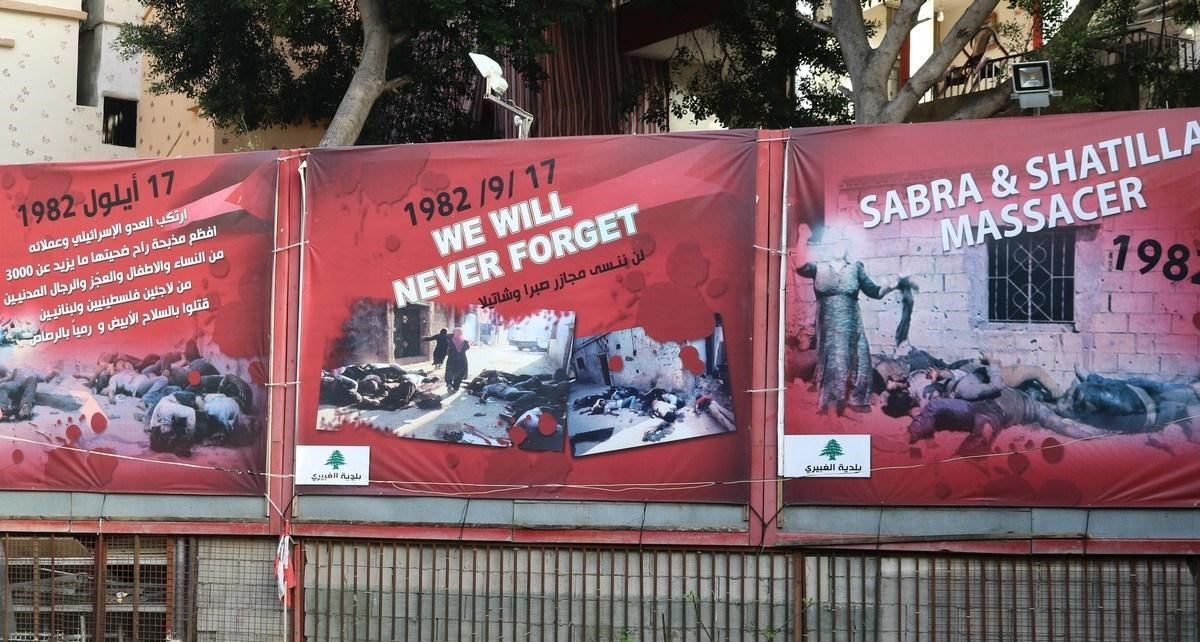
There are certain profound events in a nation’s history that leave an indelible mark on all its people. The massacre in two Palestinian refugee camps in Beirut, Sabra and Shatila, on September 16, 1982 stands as one of those events.
Taking place during the course of the Lebanese civil war, Israeli forces shot flares into the night sky, lighting the way for far-right Lebanese militias to carryout the systematic killing of up to 3500 Palestinian and Lebanese men, women and children. The massacre lasted 48 hours.
Sabra and Shatila signalled the end of an era for the Palestinian resistance movement. An era that grew from the refugee camps in Lebanon and honored Palestinian refugees and their right of return; an era that did not question the value of armed struggle in national liberation; an era that nurtured some of the best of Palestinian cultural and political life; an era that restored Palestinian dignity after the harrowing years that followed the Nakba.
In 1982, the U.S. administration betrayed the written guarantees they had given to the PLO to protect Palestinian civilians in the refugee camps. An article by Palestinian academic Rashid Khalidi in 2017 titled “The United States was responsible for the 1982 massacre of Palestinians in Beirut” studied what guarantees were given by U.S. officials and what they knew at the time. Khalidi also noted in his conclusion that the “ill-considered and morally flawed decisions about the 1982 war that were made by American policy-makers” continue to this day, with the same dangerous repercussions.
Nonetheless, a decade later, the Palestinian leadership agreed to the Oslo Accords, which we now know did immense damage to the Palestinian struggle. Where would the Palestinians stand now if the Oslo Accords had never been ratified, if the First Intifada had continued, if the PLO still inspired unity and stood for all the concepts encompassed in its name?
In 2007, on the 25th anniversary of the Sabra and Shatila massacres, I wrote a commentary that was presented on the Voice of Palestine radio show in Vancouver. Sadly, its words still ring true; we are still waiting for justice, not only for the victims and survivors of Sabra and Shatila but for all Palestinians.
“It was September 1982. The summer had been brutal, the Israeli invasion of Lebanon being the issue we lived with, woke up to, and went to bed with. There was no internet, and our days were consumed with obtaining even the smallest slivers of news about the Palestinian and Lebanese casualties of the war, that numbered in the tens of thousands. We organized rallies, raised money for humanitarian aid, but none of it could erase or even reduce the emotional turmoil we constantly faced.
And then, as we all debated how and why the PLO forces left Beirut with supposed U.S. guarantees for the safety of civilians, we began to receive the flickering images on our TV screens of piled up and disfigured bodies from Sabra and Shatila. At first, the full horror of it was not immediately realized, and again, it took some time before all the details emerged. At least 3000 civilians (bodies were dumped in mass graves so figures are at best conservative) butchered and mutilated by Lebanese fascist forces with the full support of the occupying Israeli army in manners almost too gruesome to think about. And all of this with American guarantees for civilian safety.
We were like people in shock, numbly going ahead with plans for large protests but knowing at some deeper level, that the tragedy here would take a long time to process.
Many events happened in the aftermath but none brought the smallest amount of justice to the Sabra and Shatila victims. Ariel Sharon was found complicit even by Israeli institutions, but then returned as prime minister some years later. The victims tried to receive some modicum of accountability with their lawsuit in Belgian courts, which was then squashed by pressure from U.S. and other governments. Once again, the massacre of Palestinians was an inconvenient reality, and the memory of it even more inconvenient.”
Perhaps the new normalization/weapons agreements that have just been signed at the White House, one day before the Sabra and Shatila anniversary, will be looked back on by future analysts as marking the end of another era. The era of U.S. hegemony, destruction, and disregard for the lives and livelihood of the Palestinian and Arab peoples. And only then will the scars of the Sabra and Shatila massacre truly begin to heal.
by Marion Kawas
Pubished Sept. 17, 2020 in Mondoweiss