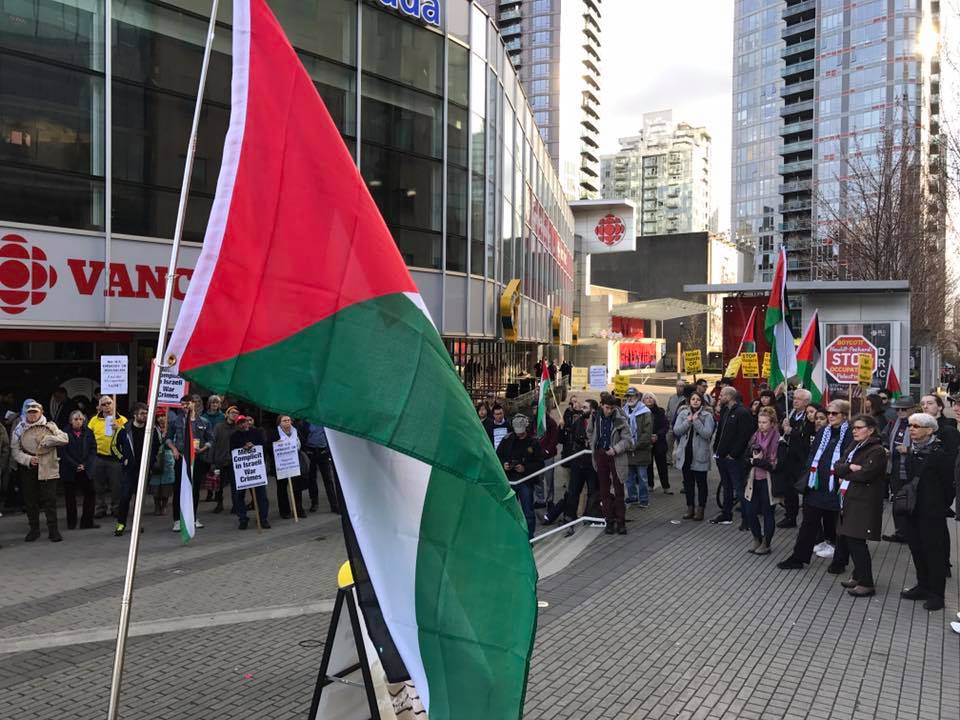
#Justice4ElHalabi

On March 14, 2021, there was a second social media action day to highlight the case of Palestinian political prisoner Mohammed El-Halabi. During our Feb. 28th initial campaign, the tweets alone reached 3.1 million people – and thousands participated. With Mohammed El-Halabi, Palestine’s “Humanitarian Hero,” facing a new unjust Israeli hearing this week, Just Peace Advocates, Canada Palestine Association, Palestine House and Samidoun Palestinian Prisoner Solidarity Network came together again to call for #Justice4ElHalabi!

Background Info: Free Mohammed El-Halabi! – Canada Palestine Association (cpavancouver.org)

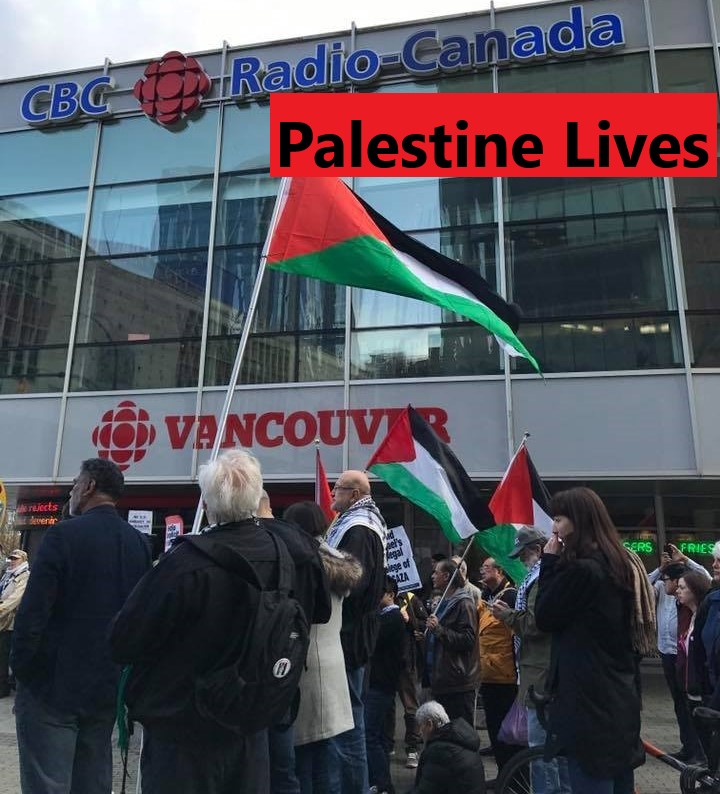
CBC Ombudsman says apology “unwise”, but anti-Palestinian language guide is “reasonable”

Six months after CBC’s show The Current deleted, and apologized for using, the word Palestine, the CBC Ombudsman has finally released his review of the case. His long report concluded “that while The Current did not violate journalistic standards, producers made a poor decision in issuing an apology. Even though the original program was at odds with CBC’s usual practice, it would have been better to leave it as is.”

The Ombudsman posed 4 questions. Did CBC violate its own journalistic standards. He answered No. Is CBC’s language guide on Palestine reasonable? Yes, it is. Did the on-air apology violate CBC’s standards? No.

But then question number 4: Was the apology reasonable in this instance? The answer was No, despite the CBC staff adhering to the supposedly “reasonable” language guide.

For those not familiar with the background, on August 18, 2020, The Current carried an interview with Joe Sacco where the host used the word Palestine. This was deleted in the later online version and apologized for the next day. Following multiple complaints from listeners, it was learnt that CBC’s language guide actually embeds this kind of anti-Palestinian discourse.

It might appear positive that the Ombudsman conceded that “the decision to excise the word Palestine from future editions, and the decision to make the apology, were both unwise.” But his conclusion is tainted by the fact that this incident is presented as merely an aberration, against a background of otherwise sound CBC policy on language regarding Palestine. As such, this can only be regarded as mere window-dressing.

Perhaps the negative and broad backlash generated by this whole controversy was the main reason for the conclusion that the apology was “a poor decision”. Frankly, CBC looked extremely foolish when news of this controversy broke; the more senior management tried to defend it, the more ridiculous they appeared. Even the guest on the show, Joe Sacco, questioned the apology and noted: “To whom, exactly, was the CBC apologizing for using the word ‘Palestine’?”

We question if there is an “in-house hasbara unit” at CBC, given the extreme tone of the relevant language clause, detailed previously in an official response by Paul Hambleton, Director of Journalistic Standards.

Palestine vs. Palestinian territories — There is no modern country of Palestine, although there’s a movement to establish one as part of a two-state peace agreement with Israel. So do not refer to Palestine or show a map with Palestine as a country. Use the term “pro-Palestinian” instead of “pro-Palestine” when referring in generic ways to Palestinian supporters. Areas under the control of the Palestinian Authority are considered Palestinian territories: Fatah-run West Bank and Hamas-run Gaza Strip…In November 2012, the United Nations voted to grant “non-member observer state” status to Palestine. We can accurately mention this in stories when relevant. But the UN does not grant nationhood, and it remains premature to call Palestinian territories the country of Palestine. When making references to historical Palestine, use clear language (e.g., “British Palestine” is the accepted term for the British Mandate of Palestine, which administered the region between 1920 and the birth of Israel in 1948).

To conclude that this language guide is “reasonable”, but somehow implementing it as The Current did was “unwise”, is both disingenuous and misleading. Of course, the decision of Current producers was made even more ludicrous, given that Joe Sacco has a book entitled Palestine. But this whole incident simply highlighted how fundamentally flawed CBC’s language guide is, something the Ombudsman refused to acknowledge; in fact, it was the logical extension and outcome of the dictates in the language guide.

Further, the Ombudsman’s review unfairly shifts the blame from CBC’s inherently biased policies to individual programmers.

After insisting that CBC’s approach is “coherent” and in “good faith”, the Ombudsman does note:
“That said, it is understood that the language guide is a living document, and incidents such as this should prompt CBC to revisit its guidelines not only to ensure that editorial leaders are still confident that they have struck the appropriate balance, but also to ensure that CBC staff know how to apply the guidelines.”

CBC: This is Censorship

The Ombudsman is adamant that there is no censorship of Palestine at CBC, dismissing such “rhetoric” as “simply untrue”. But what are listeners to understand from a policy that insists staff must not refer to Palestine, must not show a map with Palestine as a country, and must not even use the term pro-Palestine in a generic way? To censor is defined by Merriam-Webster as to “suppress or delete as objectionable”; this is exactly what CBC is doing in their language guide.

We know that other listeners have been told several times that CBC guidelines are always being revisited, but to no avail. As the complainant referenced in the Ombudsman’s report, we call on CBC to immediately review its language guide on Palestine and amend it to reflect not only international reality but also to show a commitment to impartiality and follow its declared mission to “seek out the truth”. Their policy as it stands now is both offensive and censorship; its denial of the existence of Palestine as a country, a nation, a people, and a culture with thousands of years of history amounts to institutional and systemic anti-Palestinian racism.

Check out our letter to the Ombudsman requesting the review: CBC Insists on Erasing Palestinian National Identity – Canada Palestine Association (cpavancouver.org)

Coverage of this campaign: ‘Do not refer to Palestine or show a map with Palestine as a country’ — the CBC’s Orwellian rules – Mondoweiss
Canadian complicity: Is ICC serving justice or Western interests?

New article in Mondoweiss on how Canada is helping to shield Israel from war crimes investigations.

Further Updates: This past week the International Criminal Court – ICC elected new top officials.

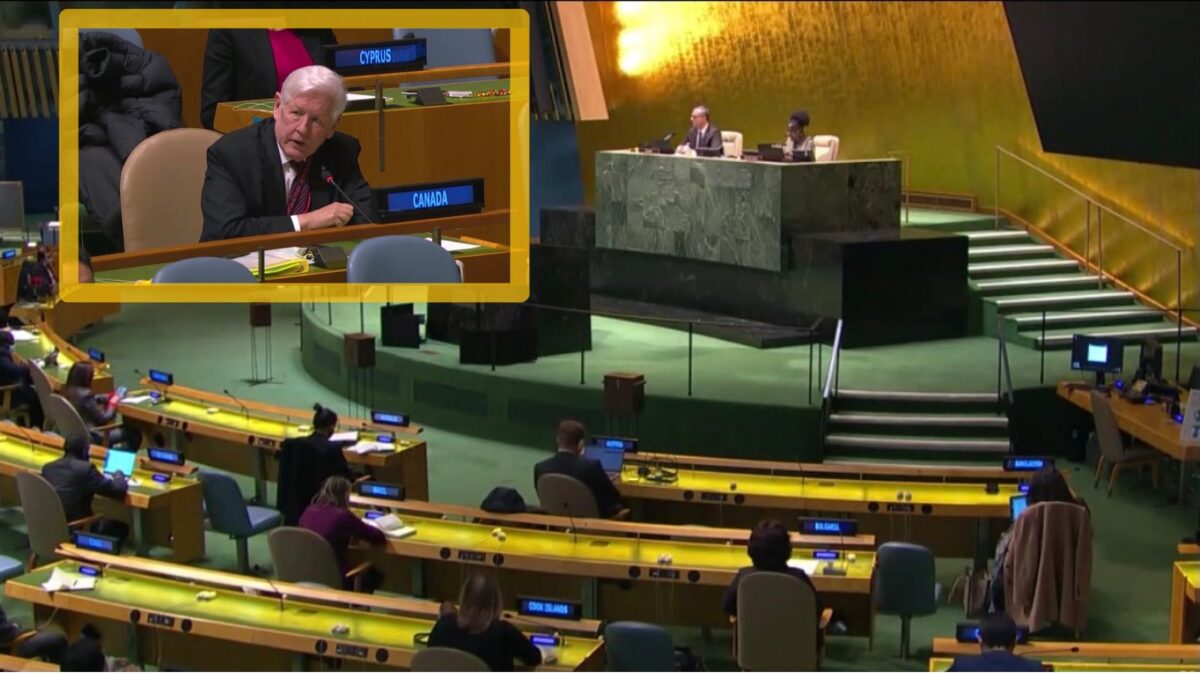
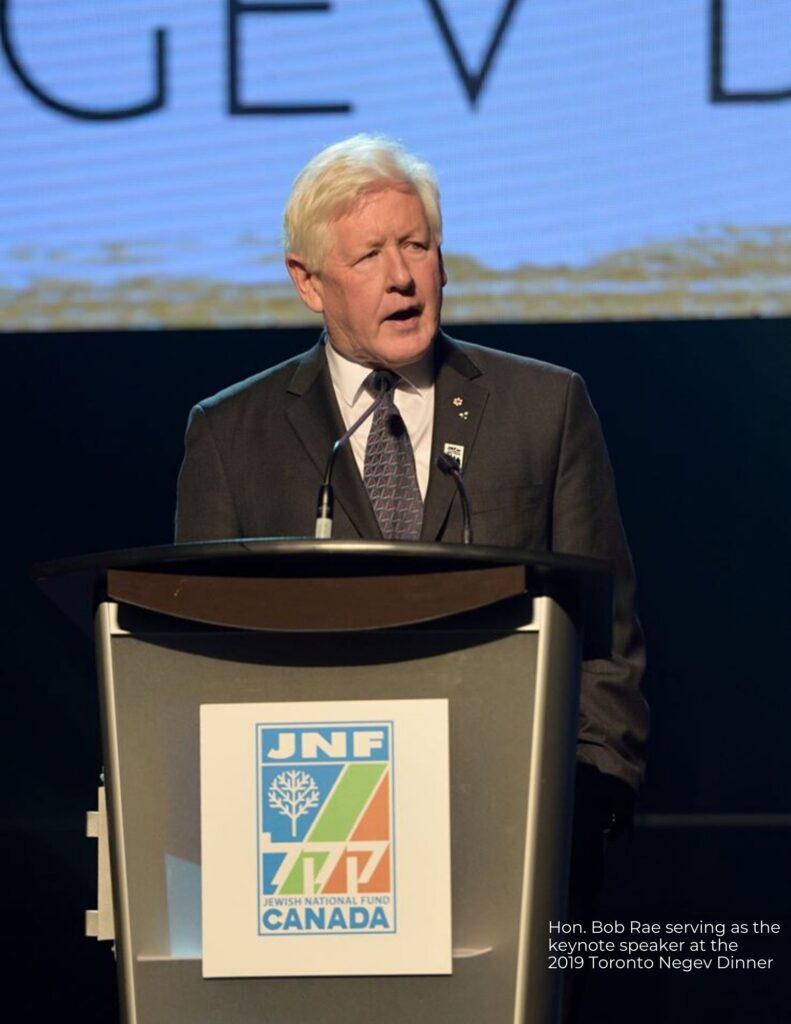
  1. Canadian UN ambassador Bob Rae was elected as a vice-president. Bob Rae is a well-known supporter of Israeli war crimes, he was the keynote speaker at the JNF Toronto Negev Dinner in 2019. The JNF recently admitted that it has been violating the Fourth Geneva Convention all along: “Throughout the years and till this very day, KKL-JNF has been operating in all parts of the land of Israel, including Judea and Samaria,”. It also acknowledged it plans to steal more Palestinian land.
    As for Bob Rae, we pose this question: Can a supporter of war crimes investigate war crimes??
  2. Parties to the International Criminal Court elected Britain’s Karim Khan as the new prosecutor for a nine-year term starting June 16. The Times of Israel reported that “Israel’s Kan public broadcaster reported that Israeli officials supported Khan’s candidacy behind the scenes, and consider him a pragmatist who shies away from politicization.” 

There was considerable euphoria on February 5th when the ICC decided favourably on “the Court’s territorial jurisdiction in the Situation in Palestine”. People felt that finally justice might take its course, now those hopes seemed premature.

Justice delayed yet again is Justice denied.
Justice is now in mourning.

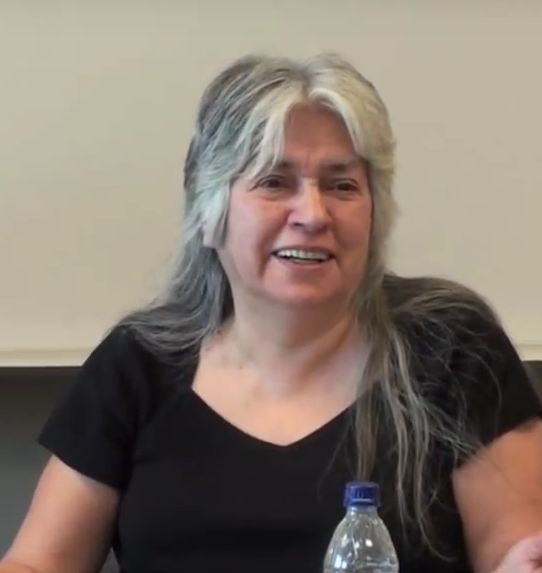
Indigenous activist Lee Maracle on CBC erasure of Palestine

Lee Maracle, author, poet and indigenous activist issued the following statement after learning of the attempts by the Canadian Broadcasting Corporation (CBC) to erase Palestine and the Palestinian national identity.
Lee is also a longtime supporter of the Palestinian people’s struggle.

“Indigenous people in Canada know about erasure as a means of eradicating the plight of indigenous nations for nationhood. Palestine has been in this boat for sometime now along side of us.  The manifestation may be different, but erasure (terra nullius) is always the result.  Indigenous people in Canada are referred to as First Nations as though a village were a nation.  In fact, the application of this term to each reserve, serves to fracture the original nations.  Tkaranto, has a treaty that dates back to the colonial era between The Anishinabek and their allies and the Haudenausaunee (please google, Canadians should know this).  It is the treaty of the dish with one spoon, which is a sharing arrangement between two giant confederacies, covering southern Ontario and Quebec and respected by the Anishinaabe people of northern Ontario, Manitoba, Illinois and Minnesota and the Haudenausaunee of Quebec, Ontario and New York, a territory about the size of Europe.   Palestine is small, but it has been Palestine for thousands of years.  We all know this.  We respect this.  Another cannot give away another nation’s territory.   We do not acknowledge this erasure of Palestine and we do not respect the attempt to eliminate the Palestinians and the right to their nation.”

Si’Yam Lee Maracle OC

CBC still mulling over its anti-Palestinian bias

Last summer’s fiasco at Canada’s national broadcaster CBC over its censure of the word Palestine has brought new focus to the debate over why there is such pro-Israel bias in most media in North America.

Some brief background: The CBC show “The Current” had an interview with Joe Sacco where the host used the word Palestine. This was deleted in the later online version and apologized for the next day. In the subsequent uproar from listeners about this action, it was learnt that CBC’s language guide actually embeds this kind of anti-Palestinian discourse. The relevant clause in their language guide was more extreme than some “hasbara” handbooks, basically “NO” to all things Palestine.

Four months later, the case is still under review at the CBC’s Ombudsman office; but the results of his investigation are by no means guaranteed to overturn their archaic policies, either in respecting universal human rights or even common journalistic practice. We hope this will not be a case of “the mountain laboured and brought forth a mouse”, as happened with a previous complaint involving biased coverage at CBC.

Which begs the question – why is anti-Palestinianism so entrenched at Western media outlets like CBC? Is it simply because of the influence of the Zionist lobby or are there other factors at play? Is it because Canada also shares a settler colonialist past? Or is it because of Canada’s subservience to U.S. foreign policy?

An article written in July 2020 titled “Uncovering Canadian Media’s Devastating pro-Israel Bias” by journalist Davide Mastracci offered a glimpse into the reality of how media has become so dangerously biased.

The “blunt force trauma” approach described so accurately in Mastracci’s article that was prevalent in the Israel Asper/CanWest era in Canada lives on in a more covert legacy like CBC’s language guide. Following are excerpts from that convoluted language guide on Palestine vs. Palestinian territories, as detailed in an official response by Paul Hambleton, Director of Journalistic Standards.

“Palestine vs. Palestinian territories — There is no modern country of Palestine, although there’s a movement to establish one as part of a two-state peace agreement with Israel. So do not refer to Palestine or show a map with Palestine as a country. Use the term “pro-Palestinian” instead of “pro-Palestine” when referring in generic ways to Palestinian supporters. Areas under the control of the Palestinian Authority are considered Palestinian territories: Fatah-run West Bank and Hamas-run Gaza Strip…But the UN does not grant nationhood, and it remains premature to call Palestinian territories the country of Palestine. When making references to historical Palestine, use clear language (e.g., “British Palestine” is the accepted term for the British Mandate of Palestine, which administered the region between 1920 and the birth of Israel in 1948).”

Multiple inaccuracies in this policy were already highlighted in Canada Palestine Association’s request to the Ombudsman Office for a review, from the colonialist nature of so-called “British Palestine” to the extreme and petty refusal to even allow pro-Palestine as a generic term. But another point that needs addressing: what is this “Fateh-run West Bank and Hamas-run Gaza”? Does CBC talk about Likud-run Israel? Or Saud Royal Family-run Saudi Arabia? And this particular phrase also stands out: “But the UN does not grant nationhood”. But hold on a minute, didn’t the UN already do precisely that in 1947 with Israel, by passing the Partition Plan and Resolution 181?? This level of arrogance and condescension, coupled with a conscious refusal to portray the Palestinians as a national unit and entity, runs deep.

This approach is also prevalent in the Canadian government’s stated policy, which CBC refers to as backup for its flawed language guide. At first blush, Canada’s official position might appear somewhat fair-minded, although of course always favouring Israel’s security as the first criteria to consider. But a closer look reveals that, with the exception of using proper names like Palestine Liberation Organization and Palestine National Council, there is also no use of the word Palestine throughout the entire document (exactly like CBC). Any logical mention of the state of Palestine or just Palestine is replaced by the more ambiguous “Palestinian state”.  For example, the Canadian government is supposedly committed at some undetermined point in the future to a “Palestinian state living side by side…with Israel”.

Is this accidental or is there a coordinated effort here as well to undermine any references to the national identity of Palestine? Is this done intentionally to bolster the Israeli narrative, a narrative guaranteed to never result in a genuinely sovereign and independent state of Palestine?

Words are important weapons in the hands of Israel and its international supporters, and Zionist ideologues have worked for decades to sanitize language to better favour their goals and objectives. This is why they refuse to speak of Palestinians in Israel, instead they must be called Arab Israelis (another policy favoured by CBC although they seem confused if it should be Arab Israelis or Israeli Arabs). That’s why they talk of agreements between Israel and the Palestinians, not Israel and Palestine. And that’s why the Canadian government’s voting record at the UN, despite its more recent claims to recognize Palestinian self-determination, ends up overwhelmingly supporting the “Greater Israel” settler colonialist project.

CBC’s mishandling of this issue has had the unintended result of shining a spotlight on the decades-old erasure of Palestinian national identity in both the Canadian media and government. Be it interference in university hiring, or appointing notorious pro-Israel advocates to police free speech, or CBC’s outrageously biased language guide, it seems the attempt to eviscerate all things Palestine is moving forward with an increasing intensity and ruthlessness.

Denying the existence and culture of indigenous peoples, and denying the humanity of the colonized, are all shared traits in the supremacist mentality of settler colonialists. But such fabrications, negation of Palestinian identity and racist pronouncements will not halt the Palestinian march towards equality, liberation and return.

by Marion Kawas 

Another version of this article was carried in Mondoweiss.