
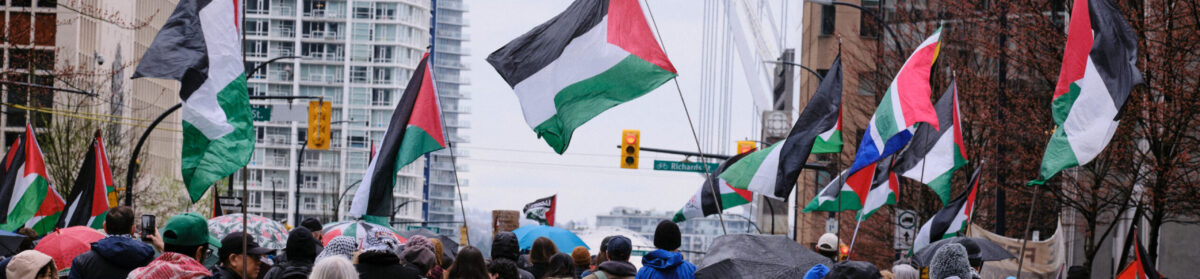
In Canada, BDS loses in the House of Commons but wins on university campuses

The following article by CPA member Marion Kawas was published by Mondoweiss… Read more

The following article by CPA member Marion Kawas was published by Mondoweiss on February 25, 2016.
—————————————————————————————————–

In Canada, BDS loses in the House of Commons but wins on university campuses

So the Boycott, Divestment and Sanctions BDS movement had a big day on Monday, Feb. 22, 2016 in Canada, both in the House of Commons and on university campuses.

Within a few hours of each other, Canadian politicians voted 229-51 to condemn BDS and even individuals who promote it; then the Students Society at McGill, a leading university in Montreal, voted to support BDS. An interesting irony here is that the new Canadian PM, Justin Trudeau is an alum of McGill and even personally condemned the efforts to support BDS at McGill when it was first introduced a year ago.

Lets deal with the motion in the House of Commons first (not yet a bill but it was made clear that’s where some MPs would like to see it go). It was introduced (not surprisingly) by the opposition Conservative party, the same party that governed Canada for the previous 10 years and were incredibly staunch supporters of Israel. It stated:

“That, given Canada and Israel share a long history of friendship as well as economic and diplomatic relations, the House reject the Boycott, Divestment and Sanctions (BDS) movement, which promotes the demonization and delegitimization of the State of Israel, and call upon the government to condemn any and all attempts by Canadian organizations, groups or individuals to promote the BDS movement, both here at home and abroad”.

Note particularly the inclusion of “individuals” in the condemnation phrase. So of course the Conservative Party supported the motion overwhelmingly. And those who had voted in the new Liberal government hoping for change were immensely disappointed as it was announced (and followed through with) that the government would also support the motion. Three brave Liberal MPs did actually vote against it and others abstained. But the logic of the Liberal Party as to why they were supporting it was a real lesson in political double-speak and illogic.

The new Foreign Minister, Stephan Dion, when commenting on the wording of the motion in the debate in the Parliament, which happened several days before the actual vote, stated that … “this rhetoric elicits mistrust and it comes from the Conservatives, who in recent years have constantly tried to transform support for Israel into a partisan issue in Canada.” But then also said “We must oppose anything that stands in the way of stronger ties between Canada and Israel”.

As Neil McDonald, a veteran CBC journalist, noted in a wry commentary about the debate and Minister Dion’s comments:

“There is also, added the minister, the small matter of freedom of speech and debate. Dion denounced the Conservatives’ opposition day motion…as just more “politics of division.”

The Tories, he said, are just “bullies” who want to turn the defence of Israel into a partisan issue. They’ll portray anyone who votes against their motion as “dissidents.”

‘It’s not us who wrote this motion,’ Dion complained, ‘but we have to vote yes or no.’
So, um, yes. Reluctantly, yes.”

The take-away message from the official Liberal position was something like this: yes, this motion infringes on freedom of expression, we are against that, but we’re going to support it anyway to show our support for Israel. Really?! So support for a foreign country or government is more important than the right of free speech in Canada and upholding the Charter of Rights? Would this approach apply in all cases, or just when it comes to Israel?

Now, the position of the New Democratic Party, who did vote against the motion along with the Bloc Quebecois, was summarized like this during the debate by one of their MPs, Charlie Angus:

“Mr. Speaker, To be clear, we are not debating issues of racism and anti-Semitism.
That is not what this is about. This is about a political tactic and whether we agree with that political tactic or not.
The House, supported by the Liberal government of the day, is supporting actions for the government to condemn any attempts made by individuals or organizations.”

Right on, and words we could get behind and cheer for if this wasn’t the same party that purged some of their own candidates for speaking out on this issue back in August 2015 during a heated election campaign. It would seem that the issue of Palestinians rights and lives is a political football in Canada (the Greens being the one exception). We must content ourselves with accepting whatever limited crumbs are thrown our way whenever it suits the prevailing winds and are criticized if we’re not grateful.

Lets go back to the Student Society at McGill. The McGill BDS Action Network had submitted a resolution calling on the Student Society to:

“stand in support of BDS campaigns and to recommend to the Board that McGill divest entirely of all its holdings in companies that profit from the occupation, as well as implement a screening mechanism that would prevent future investments in similar companies. The motion will specifically support the campaign for McGill to divest from corporations that profit from the occupation of the West Bank and Gaza. These corporations include Re/Max Holdings Inc., whose Israeli subsidiary sells real estate in settlements throughout the West Bank, and Mizrahi-Tefahot Bank, which has financed settlement construction projects and provides mortgages to homebuyers in settlements. A third company, L-3 Communications Inc., has supplied equipment to Israeli checkpoints, signed contracts with the Israeli Ministry of Defense for the production and remanufacture of tank engines, and developed the Hermes 900 drone with Elbit systems, used for the first time in Operation Protective Edge in 2014.”

The motion passed with 512 in favour, 357 opposed and 14 abstentions. This represents the future and embodies all our hopes for justice for the Palestinians. The Canadian House of Commons, alternately, reminds of the opposite.

The main lesson here for activists is that only effective grassroots organizing will really help the Palestinian people in their struggle and intensifying BDS work is part of that effort. The efforts and ultimate success by the McGill BDS Action Network is just one positive example of that, although the pushback from the Zionist lobby has already begun and surely will continue. But the hard work of networking and maintaining BDS campaigns have proven to be the best strategy for international supporters who want to see the Palestinians be able to live in freedom and dignity.

“Never again” must mean NEVER AGAIN FOR ANYONE!

Debunking Zionist Hasbara

On November 27, 2015, a meeting was held in downtown… Read more

Debunking Zionist Hasbara

On November 27, 2015, a meeting was held in downtown Vancouver, Canada under the title “First Nations & Palestinians at the Frontline of Resistance” organized by the Seriously Free Speech Committee and supported by another 10 community groups (of which Canada Palestine Association-Vancouver was one). On the day of the meeting, the local Zionist apologist paper “Jewish Independent” ran an editorial “Co-opting history”, full of the Israeli Hasbara 3 D’s – Distort, Divert and Defame.

Their editorial stated: “The obvious intention is to equate the history of colonial settlement in North America, Canada in particular, with the actions of Israel toward Palestinians.”
Wrong. The editorial conveniently refuses to recognize the Zionist project as settler colonialism, and therefore will not acknowledge that the intention was to draw parallels between settler colonialism in North America and Zionist settler colonialism in Palestine, in addition to exposing “the actions of Israel toward Palestinians”.

The editorial went on to claim: “The concept is flawed at its core, of course, because, as the Palestinian narrative often does, it portrays the Jews as colonial occupiers of Arab land, while denying the legitimacy of ancient and modern claims to the Jewish homeland.
Wrong again, and on more than one account.
First, the Palestinian narrative doesn’t “portray the Jews as colonial occupiers of Arab land“, it portrays the Zionists (not THE Jews) as settler colonial occupiers of Arab land. For a paper that claims to be opposed to anti-Semitism, conflating all Jews with Zionism and putting the ills of Zionism on the shoulders of all Jews is a dangerous slide into anti-Semitism.
Second, there is no legitimacy (not ancient nor modern) for Zionist claims to a Jewish homeland in Palestine. Period.
• As Israeli historian Ilan Pappe simply puts it: “The secular Jews who founded the Zionist movement wanted paradoxically both to secularize Jewish life and to use the Bible as a justification for colonizing Palestine; in other words, they did not believe in God but He nonetheless promised them Palestine.”
• The first Zionist Congress held in Basle, Switzerland (in Europe) in 1897 listed as some of the aims of the movement: “Zionism strives to create for the Jewish people a homeland in Palestine secured by public law. The congress contemplates the following means to the attainment of this end – The promotion on suitable lines of the COLONIZATION (my emphasis) of Palestine by Jewish agricultural and industrial workers.”
• Theodor Hertzl and most European Zionists were willing to accept any other country for their settler colonialist project:- “Herzl turned to Great Britain and met with Joseph Chamberlain, the British colonial secretary and others high ranking officials who agreed in principle to Jewish settlement in East Africa.” The Sixth Zionist Congress then adopted the Uganda Proposal .
• Most European Jews who founded the idea of political Zionism have no relation to the original Jews (Hebrews) of the Holy Land. A recent report about a new DNA study, carried in leading newspapers like the NY Times and Haaretz, and highlighted in the prominent Jewish American journal Forward, found that “The maternal ancestry of Ashkenazi Jews comes mainly from Europe…”.
• Conversely, large numbers of Arab Muslims and Christians were originally part of the Hebrew tribe; many Palestinian Christians (the first believers) were, like Christ himself, from the Hebrews. And, many of those first Christians, in addition to many Jews, converted to Islam. Where do these people fit in the Zionist supremacist ideology? Or are (Ashkenazi) Jews, who have no roots in Palestine, considered from the “Chosen people” simply because they are white and “CIVILISED” in colonialist terms? Theodor Herzl, considered the founder of political Zionism, wrote in his book The Jewish State in 1896: “We should there form a portion of the rampart of Europe against Asia, an outpost of civilization as opposed to barbarism.”

The “Jewish Independent” editorial then goes on to divert from the issue of settler colonialism to say:
The anti-Israel movement insists on appropriating the historical experience of other people and using it in an attempt to fortify their narrative. The most obvious example is the apartheid libel, which tries to paint Israel as the ideological descendant of South African racism. This is offensive not only to Israelis. It debases the experience of black South Africans who suffered from genuine apartheid.
Apartheid libel? Really!! Israel is the one who builds apartheid towns, roads and walls. Israel is the one who practices the brutal apartheid system against the occupied Palestinian territories and finally, Israel is the one that has enacted over 50 laws to discriminate against its Christian and Muslim Israeli citizens.
As for debasing “the experience of black South Africans”, it is the “Jewish Independent” who is debasing and ignoring “the experience of black South Africans” who have visited Palestine and stated unequivocally that the apartheid Palestinians are experiencing is similar or worse than what happened in South Africa. As former South African Intelligence Minister Ronnie Kasrils noted, “Israel came to resemble more and more apartheid South Africa at its zenith — even surpassing its brutality…” (see “Israel and apartheid: A fair comparison?” by Edward C. Corrigan)

And the editorial is not yet finished with its outrageous claims and defamation, alleging: “Even more egregiously, the anti-Israel movement routinely uses the imagery of Nazism and the Holocaust against Israel, attempting to equate the victims of the Third Reich with its perpetrators. This deliberate rubbing of salt in Jewish historical wounds is common and…the objective is clearly to inflict pain rather than to resolve grievances.
And again the editorial treats Israel, Zionists and the Jews as one and the same; the victims of the Third Reich were the Jews and not the Zionists, some of whom collaborated with the Nazis to fulfill the aims of Zionist immigration to Palestine. We in the support movement will never “equate the victims (the Jews) of the Third Reich with its perpetrators.”
For the record, the first one who coined the phrase Judeo-Nazis was the late Israeli philosopher professor Yeshayahu Leibowitz. And Avraham Shalom, former head of the Shin Bet has even stated in the documentary The Gatekeepers: “On the other hand, it’s a brutal occupation force, similar to the Germans in World War II. Similar, but not identical.”
Listen to what 327 Jewish Holocaust survivors and descendants stated in a letter that was published in New York Times:
“We must raise our collective voices and use our collective power to bring about an end to all forms of racism, including the ongoing genocide of Palestinian people. We call for an immediate end to the siege against and blockade of Gaza. We call for the full economic, cultural and academic boycott of Israel. ‘Never again’ must mean NEVER AGAIN FOR ANYONE!”

The editorial, from beginning to end, sought desperately to discredit, slander and defame the Palestinian people and the Palestinian solidarity movement (and all the groups involved in the meeting). One might be forgiven for thinking the article was a template borrowed from the Israeli Foreign Ministry.
For the Zionist apologists in the “Jewish Independent”, genuine support and solidarity are foreign concepts. They do not and cannot understand the true meaning of support amongst the oppressed peoples of the world, because their main concern is the bottom line in pleasing their Zionist readership. Regrettably, in the process, they have become complicit in Israeli apartheid, ethnic cleansing and war crimes against the Palestinian people.
The fact is that Israel and its apologists are only in solidarity with imperial forces and despotic regimes, forces that Israel continuously supplies with crowd control weapons and assorted military hardware. One recent example is Israel’s sale of mass surveillance technology to Colombia.
An interesting footnote is that the Zionist editorial completely (perhaps intentionally) failed to mention the main organizer of the meeting, the Seriously Free Speech Committee.
Our final question is: Exactly who is co-opting history?

Hanna Kawas
Chairperson, Canada Palestine Association.
This article was published by Mondoweiss Dec. 9, 2015

CBC: False and pro Israeli narrative

The following message was sent to CBC ombudsman on August 11, 2014:

Dear CBC ombudsman
I sent the following web-mail to CBC News.
Please review it and make sure that future stories are accurate, balanced and reflect the reality on the ground.
————————–
Your report “Gaza conflict: Israel, Hamas accept ceasefire proposal” smacks of pro-Israeli bias. It is inaccurate and negates the existence of Palestinians who are not Hamas. The Palestinian delegation (including all the resistance organizations), headed by a Fateh member, is the one that accepted the ceasefire. Please stop spreading misleading Israeli propaganda. I will bring this complaint to the attention of CBC ombudsman.

Thanks for your attention
Hanna Kawas,
Chairperson, Canada Palestine Association

Biased CBC Coverage‏

Letter to CBC News Vancouver Regarding Biased Coverage

August 1, 2014
News… Read more

Letter to CBC News Vancouver Regarding Biased Coverage

August 1, 2014
News Editor, CBC News Vancouver
We believe that your coverage of local events regarding the Israeli aggression on Gaza has been biased as well as unbalanced.
We had thousands of Vancouverites that took to the streets in downtown Vancouver on July 3, 2014, July 12, 2014, July 19, 2014 and July 25, 2014 to protest Israeli war crimes and the complicity of the Canadian government in them. The July 12 rally was held in front of your headquarters in Vancouver, and the July 19 protest also marched to and protested in front of your headquarters for around five minutes. You did not see fit to report any of these actions except for a short reference to the “anti-Israeli” rally on the July 19 edition of the news.14:50 -15:15 (25 seconds)
In contrast, on July 27, 2014, a much smaller group of pro-Israeli demonstrators got extensive coverage with personal interviews about their feelings and opinions regarding what is happening (almost six times the coverage of the thousands that showed up for our rallies). 2:22 seconds.
We are having a rally this coming Saturday, Aug. 2nd at the Art Gallery and we will march to your headquarters at 3:15 pm. We are hoping to hand you this letter and have a delegation meet with you or a CBC representative to deal with this one-sided coverage that smacks of racism against the Palestinian people.
Hoping to hear from you,
Hanna Kawas (Chair, Canada Palestine Association) hkawas@msn.com
On Behalf of Rally Organizing Committee

c.c. CRTC, CBC Ombudsman

“Thomas Mulcair showed he gets it”!!!

The following email was sent on Dec.4, 2013 to NDP MPs and Party Officials:

Please stop pandering to the pro-Israel lobby, you will never win their vote. Instead, you are losing the progressive vote, your pride and your humanity.

Hanna Kawas

———————————-

Nov. 22, 2013
NDP solidly supports Israel
Editorial by: (“Jewish Independent”)
We call it the “kishkes” question. Any politician can mouth platitudes that sound good to Jewish voters. But most of us can differentiate between a politician who knows the right things to say versus one who truly understands the Jewish experience and why Israel is central to the Canadian Jewish identity. At a Montreal conference recently, New Democratic party leader Thomas Mulcair showed he gets it.
Canadian Jewish News reported on Mulcair’s comments at an event sponsored by the Montreal Friends of Peace Now and the Labor Zionist History Circle. Mulcair said he is “a friend of Israel under all circumstances,” and said that “singling out Israel as a pariah” is wrong. He said the movement to apply boycotts, divestments and sanctions against Israel is “exactly the wrong direction we should be going in” and said the accusation of apartheid against Israel “serves no purpose.”
Most significantly, Mulcair showed that he understands the bottom line when it comes to Israel’s survival. “Anyone who proposes a one-state solution for Israelis and Palestinians has been asleep for 60 years,” CJN reported Mulcair as saying. “It’s not a realistic solution, it’s not going to happen. It would mean invariably the death of the state of Israel…. It’s just another way of saying Israel does not have the right to exist.”
These comments are significant because they are unambiguous – and the NDP has equivocated in the past. The policy of the NDP and, before it, the Cooperative Commonwealth Federation, was strongly Zionist until 1967, when the party began to move to a position that took into consideration the Palestinian position as well. By the time of the Second Intifada, which coincided with a steep decline in the federal NDP’s success, the party was heavily influenced by anti-Israel activists, such as B.C. member of Parliament Svend Robinson. While the party may have had a balanced policy approach on the books, the loudest voices in the party were often stridently critical of Israel. The late former leader Jack Layton had to patch over a few such incidents, including forcing Vancouver MP Libby Davies to backtrack on a statement that effectively denied Israel’s right to exist.
In the race to succeed Layton, Mulcair was seen as the most pro-Israel candidate, but the issue hardly came up. Mulcair’s victory had to do with other things, mostly the potential he had to preserve the party’s historic inroads in Quebec. His recent comments are among the most extensive and clear Mulcair has yet made on the topic.
Of course, Mulcair has some strong words for the Conservative approach to the issue. The Stephen Harper government’s robust and vocal support for Israel, Mulcair suggested, has diminished Canada’s role on the international stage.
“Canada is absolutely nowhere, we are not players. Our voice could count for a lot,” he said, according to CJN. “Stephen Harper says he is a steadfast ally [of Israel], but what do allies do, if not take part in the process?… Working for peace means working with countries that don’t necessarily agree with us. That’s the essence of diplomacy. We [an NDP government] are going to be at the table … and not just harp on the sidelines.” He added: “You can’t get change if you criticize from the outside.”
This assertion has been made before by New Democrats, Liberals and others. At the risk of saying that Canada should not overestimate our self-importance, it is hard to discern Canada as having had a great impact on the last round of Mideast peace talks (or the one before that, or before that, back until maybe 1956), so we should not rend our garments over the loss of an influence we may never have had in the first place. There is something to be said for a lonely voice for Israel on the international stage adding a tiny bit of balance to a global dog-piling that even a UN interpreter dubbed over a hot mic “a bit much” recently.
We might also take mild exception to Mulcair’s well-intentioned statement that “[c]reating a homeland for the Jews is one of the noblest things the world community was able to accomplish since the war.” The UN may have voted for the Partition Plan, but when it came to the battle for survival in 1948-49, the Jews of the Yishuv were joined by very few but Diaspora Jews and a small number of idealistic non-Jewish volunteers. Israel is a noble accomplishment, we concur, but let’s not give credit where it is not due.
That aside, Mulcair’s position is laudable. He even went so far as to declare that “100 percent” of his caucus and “everyone in the NDP” supports a two-state solution arrived at through mutual negotiation and resulting in borders that allow each of the peoples to live in peace. According to CJN, Mulcair acknowledged that there have been “attempts within the party to chip away [at that position], but they have gotten nowhere.”
This assertion of unanimity is extraordinary. It is a sign of a leader almost daring dissidents to speak up, but also of a leader secure enough in his position to draw a line in the sand. A quick peruse of blogs, online comments and trade union convention resolutions suggests that not all of the people who might be expected to support the NDP are quite so enthusiastic about an Israel living in peace and security. But Mulcair is effectively telling them that they have no place in his party.
This is deeply significant. It affirms a Canadian consensus among all mainstream parties that Israel has a right to exist and suggests that anyone who disagrees is a fringe element. Let us give credit where it is due and acknowledge that Mulcair has staked out an honorable and fair-mind.