Template for Toxicity and Intimidation: BDS Busting on Campus

This article first appeared in PalestineChronicle.com.

By Marion KawasRead more

This article first appeared in PalestineChronicle.com.

By Marion Kawas

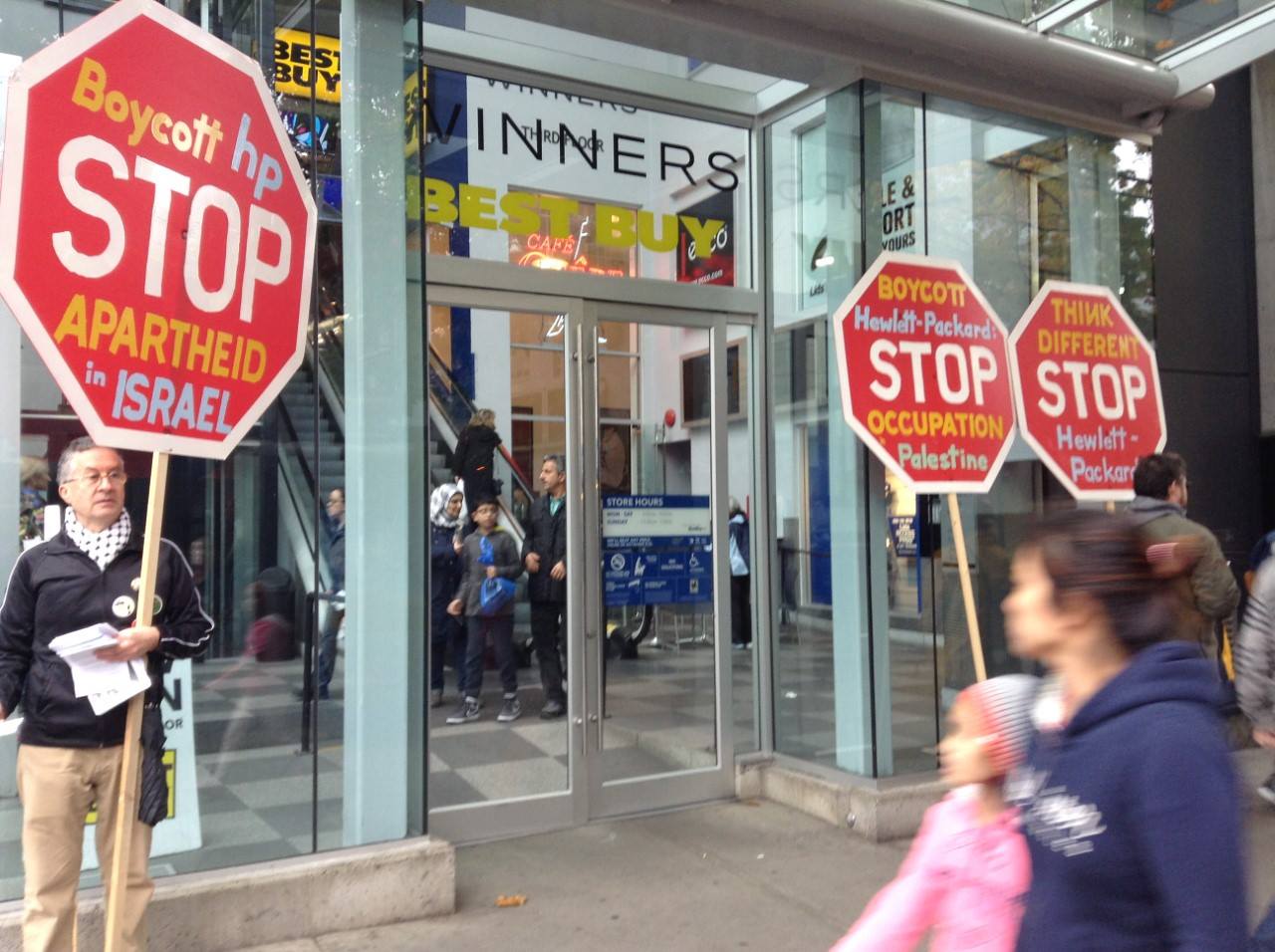
The challenges faced by the students of Solidarity for Palestinian Human Rights SPHR and the YestoBDS campaign at the University of British Columbia (UBC) in recent months serve as a template for what to expect from pro-Israel groups on campuses.

The ultimate end result was that the BDS referendum did not pass this year at UBC, although the students won an earlier landmark and (perhaps more significant) victory from the BC Supreme Court that dismissed a challenge to suppress the vote altogether.

Zionist groups have all now joined in the same chorus that the final vote count shows that BDS is “nefarious”, “divisive” and “promotes hate”.

I would suggest a different analysis, that the referendum results simply show us how much more ruthless, underhanded and aggressive the pro-Israel lobby have become around BDS, particularly at universities.

Israeli apologists constantly repeat the mantra that BDS creates a toxic and divisive environment on campus, but really, who is driving that toxicity?

After following the debates on both print and social media at UBC during the referendum, and personally witnessing the horrific verbal abuse (that could easily have escalated into physical abuse) and disruption from the “Jewish Defense League” at a BDS panel on April 3, I have come to the conclusion that part of the strategy by pro-Israel groups is to manufacture this “toxic” environment so that student unions will be hesitant to deal with the issue.

As SPHR-UBC noted in their statement following the vote, the court case and the delays in being able to campaign (especially for a volunteer student group in the final week of term) severely hindered their efficacy. They summed it up this way:

“We started this campaign knowing the odds were against us: we only had a week to campaign, the delay was caused by a legal battle that had drained our efforts already, we had limited resources compared to our opposition, and we knew it would be hard.

“Regardless, we managed to start important conversations and the outcome of the vote shows that in better circumstances we could actually make it, and we commit to keep this conversation going on campus. It’s a shame that so few students had the opportunity to be aware of the referendum due to the constraints of limited campaign time.”

There were also reports that the AMS Student Union did not send out an email to all students notifying them of the online BDS referendum, even though it was an official AMS referendum that had met all the necessary criteria and email notices had been sent 2 years prior during the first BDS vote.

Further, the AMS Code of Procedure specifically states on page 128 that for online voting:

“1. The Elections Committee shall ensure that all Active Members have an opportunity to vote and shall establish staffed information booths and take other measures to publicize the election or referendum so as to ensure that as many Active Members as possible do vote.”

Clearly this did not happen as shown by the very low voter turnout; we have to ask why? Given the hectic nature of the last week of classes, and the imbalance in resources, this AMS lack of publicity may have been critical.

From the “Hillel student that went to court” to the Bnai Brith smear campaign to the JDL thuggery – the pro-Israel lobby groups were all on the same trajectory. Make the subject so contentious, so onerous, so costly that many students will not want to take it on.

And make sure that even if you can’t convince people of the rightness of your position, the issue will be considered too “hot to handle”. As Gilad Erdan, the Israeli Minister of Strategic Affairs, said over a year ago – “Soon every BDS activist will know that he will pay a price for this.”

And given developments in the past few months, we take him at this word. If you’re of Palestinian descent, the new travel ban means you might not be able to return to see your family if you are publicly active around BDS. Or the JDL will physically assault you, as happened in Washington DC to Kamal Nayfeh, who required 19 stitches for an eye injury. Or you will be falsely linked with alleged “terrorist” groups, and your photo spread across Zionist websites for simply wearing a symbolic Palestinian scarf, as happened at UBC.

We are deeply moved that in the face of such blatant and aggressive tactics, the students at UBC were not intimidated and carried on with their YestoBDS campaign. More than that, they pledged to continue the struggle by saying:

“We will keep standing up for human rights, even in the face of hateful misinformation and intimidation. We will keep giving space to the voices of Palestinians, in the name of freedom, justice and equality.”

And this is the real victory for BDS – that despite facing the full force of what can only be called the “BDS busting” machine, these students stood their ground and insisted to speak up for Palestinian rights, and scored a precedent-setting legal decision in the BC Supreme Court at the same time.

An educational event preceded the referendum:
SPHR Presents: BDS Panel Discussion


Canadian BDS Coalition Statement on Student Activism

The Canadian BDS Coalition congratulates the Kings BDS Network at the UniversityRead more

The Canadian BDS Coalition congratulates the Kings BDS Network at the University of Western Ontario and the Solidarity for Palestinian Human Rights (SPHR) at the University of British Columbia

At King’s University College at University of Western Ontario, 76% of the students who cast a vote in a recent referendum supported their student council in lobbying the King’s administration to boycott and divest from companies complicit in human rights violations against Palestinians.

Implementation will be based by King’s University College Student Council (KUSC) on a resolution that brought results from this referendum along with another referendum on fossil fuel divestment to their March 19, 2017 Annual General Meeting.

The approved resolution mandates the student council to lobby King’s administration to boycott and divest from any and all companies and products complicit with Israeli occupation based on principles of human rights, labour, environment, and anti-corruption. It also calls on KUCSC to research and write an annual Advocacy Paper on ethical investments and divestments that will include a five-year plan for ethical investing.

On March 30, 2017, the SPHR at University of British Columbia had a ground-breaking victory when a British Columbia Supreme Court judge brought down his ruling and dismissed a case to stop a boycott, divestment and sanctions (BDS) referendum.

This occurred when pro-Israel advocates took this issue to the British Columbia Supreme Court, after being unsuccessful in getting the student union (known as the AMS Student Society) to refer the issue to a student court to decide on the “legality” of the referendum question. The ambiguity of the question was not an issue in 2015, but simply another excuse to stall and keep the referendum from going forward, and was linked to a goal to decouple the referendum from a student election vote, which would have resulted in quorum. The BC Supreme Court decision is a significant victory and stops a dangerous precedent from being set.

This action of taking a student union referendum to a provincial Supreme Court, speaks to the war that the Israeli government and its lobbyists around the world have called against those supporting the Palestinian-led global movement of boycott, divestment and sanctions (BDS) for freedom, justice and equality.

These student successes come on the heels of the Government of Israel multi-day detainment and interrogating the co-founder of the BDS movement, Omar Barghouti as part of the Government’s “tarnishing” propaganda effort to silence Barghouti and repress the BDS movement.

Without question, the ratcheted-up aggressive use of Israeli legislation and tactics is combined with passing legislation in other countries and whatever legal options can be manipulated to delay, deny and silence all discussion of global BDS campaigns.

The Canadian BDS Coalition recognizes the courage and steadfastness of the students at King’s University College and the University of British Columbia in upholding the simple principle of BDS—the principle, that Palestinians are entitled to the same rights as the rest of humanity.

The Canadian BDS Coalition is comprised of groups in Canada that support the Palestinian BDS National Committee (BNC) call for boycott, divestment and sanctions targeting Israel’s system of settler-colonialism, occupation, and apartheid towards the Palestinian people. Members of the Coalition share a common commitment to pursuing peace in Palestine/Israel through the realization of freedom, justice, and equality for Palestinians, without which a lasting peace is impossible to achieve.

However, Coalition members are not alone. An EKOS poll conducted in February 2017 found that 66 per cent of Canadians are receptive to Canada imposing sanctions on Israel and 78% consider the Palestinian call to boycott to be a “reasonable” response to Israel over Israel’s violations of international human rights law.

The continued success of boycott, divestment and sanctions affirms the stand of Canadians against the apartheid actions and policies of the Government of Israel and the military abetted settler-colonialist occupation of Palestine, and the expectation that the Canadian government will reflect this sentiment.

Canadian BDS Coalition
April 5, 2017

Air Canada is Complicit in Israeli War Crimes!

UPDATE ON CAMPAIGN
Air Canada Must be Held Accountable!

New article on Palestine… Read more

UPDATE ON CAMPAIGN
Air Canada Must be Held Accountable!

New article on Palestine Chronicle

Did you know that Air Canada is outsourcing maintenance work for its B787 jets to Israel Aerospace Industries (IAI)? And that IAI is the largest state owned defence and aerospace company in Israel? In fact, IAI is the subject of boycotts across Europe and is well-known for its drone technology and production. (See Corporate Watch report.)
Two years ago, BDS Vancouver-Coast Salish started a global campaign targeting Air Canada, which is now being relaunched. As international efforts become more focused on Israel’s military defense industry, it is high time that corporations like Air Canada are held accountable for their complicity in Israeli war crimes.

Although any outsourcing of its maintenance work was originally considered illegal and even challenged in Canadian courts, the Trudeau government has recently made moves to change the law and allow Air Canada more “labour flexibility”. Please make your union, church, and community or political groups aware of this boycott and encourage them to show solidarity with the Palestinian people as well as workers here in Canada.
It is truly shameful that Air Canada is “outsourcing” its maintenance work to this Israeli defense company that is directly responsible for the deaths of Palestinian civilians. We call on all supporters of Palestinian rights and social justice to check all other possible options before finalizing your travel plans. Send the message to Air Canada that Israeli government abuses of international law will not be rewarded with your travel dollars!

Sign the petition to Air Canada here. Check out the background info on this website’s homepage.

Exposing Real Friends and Enemies of Israel in the Arab World

The Israeli Institute for National Security Studies has just issued its… Read more

The Israeli Institute for National Security Studies has just issued its 275 page report entitled “Strategic Survey for Israel 2016-2017”. This Israeli research institute and think tank is headed by former IDF Military Intelligence Chief, General (ret.) Amos Yadlin. Its analysis offers a valuable insight into the how the Israeli intelligence and security community view and prioritize developments regionally and globally, and in the process, also exposes who are the real friends and enemies of Israel in the Arab world.

Following are a small sampling of the findings and the recommendations (labelled “challenges and responses”) contained in the report’s summarized conclusion:

* “Israel’s peace treaties with Egypt and Jordan have withstood the tumult in the Arab world. The Cairo and Amman embassies in Tel Aviv are an expression of a stable element in the regional system, and constitute an important part of Israel’s strategic position.” Page 252

* “The change in Saudi policy has expanded Riyadh’s base of shared interests with Israel, thereby facilitating closer ties between the two countries and possibly encouraging Saudi Arabia to make those ties public.” Page 252

* “From Israel’s standpoint, the non-state actors in the region are deeply involved in fighting for their existence, making them less able to concentrate on the struggle against Israel mandated by their ideology. The Islamic State branch that controls territory bordering Israel in the Golan Heights is for the most part inactive against Israel.” Page 249

* “Although Hezbollah continues its military buildup and poses a significant strategic threat to Israel, and despite the substantial resources invested by Hamas in rebuilding its military force, Israel’s overall strategic position gives it unprecedented freedom of action to initiate military operations aimed at preserving its security interests and restricting the increase in quality of its enemies’ military buildup.” page 250

* “The complete standstill in the political process and the deterioration of security in the Palestinian arena continued in 2016, and Israel continues to pay a price in lives, and in its economy, international standing, and internal political arena.” Page 253

* “Israel’s image in Western countries continues to decline, a trend that enhances the ability of hostile groups to engage in actions aimed at depriving Israel of moral and political legitimacy and launch boycotts in various areas. Indeed, the international campaign to delegitimize Israel continues, as reflected in the BDS movement. Israel’s current right wing government has contributed to this deterioration.” page 254

* “… the worst scenario is a conflict with Hezbollah on the border with Lebanon. Conflicts in the Gaza Strip will probably be limited, and Israel is well equipped to deal with them.” Page 255

The Recommendations:

– “Even if there does not appear to be a partner on the Palestinian side for reaching or implementing an agreement, Israel has an important interest in halting the gradual drift toward an irreversible one-state situation, and instead, progressing toward a two-state situation that ends Israel’s rule over Palestinians, while carefully maintaining and even improving Israel’s security.” Page 257

– “Israel must prepare measures against Lebanon’s national infrastructure without distinguishing it from Hezbollah, and develop capabilities for a ground campaign…” Page 259

– “Against Hamas in the Gaza Strip, military preparation should aim to shorten the duration of the next campaign and anticipate the tactical and systemic surprises that will be encountered.” Page 259

– “Both arenas, against Hamas and Hezbollah, should be discussed with the Trump administration, with understandings reached about Israel’s red lines, and about what will be considered a legitimate policy on the use of force against these groups in the event of another military conflict.” Page 259

– “The dialogue between Israel and Saudi Arabia and other Gulf states indicates that an effective process with the Palestinians, even if it does not include negotiations for a permanent settlement ending in a full agreement, will make a breakthrough in relations with the Gulf states possible, including making these relations public.” page 260

– “Israel can expect conflicts in both the military sphere and in soft power areas – economics, diplomacy, communications, the social networks, and the courts (lawfare)…It is therefore necessary for Israel to devise organizational frameworks, strategies, and multidimensional, coordinated methods to handle the challenges facing it.” Page 260

This article was first published by palestinechronicle.com

Is Tunisian Security Complicit in the Murder of Palestinian Leaders?

What are the connections and similarities between the assassinations of Mohammed Zawahri and Abu Jihad?
Article published by the Palestine Chronicle.

On Dec. 15, 2016, Tunisian Mohammad al-Zawahri, a Hamas leader and flight engineer specializing in unmanned aerial vehicles, was assassinated in the Tunisian city of Sfax. This operation bore eerie similarities to another assassination 28 years earlier of prominent Palestinian leader and high-ranking Fateh official Khalil Al Wazir (popularly known as Abu Jihad).

According to Gideon Levy in the Israeli newspaper Haaretz on Dec. 22, “Back in 1988, not far from the place where Zawahri was murdered, Israel murdered Abu Jihad in front of his wife and children in an operation given the poetic name ‘Show of Force’. Its perpetrators, from the elite Sayeret Matkal unit, boasted of it for years afterward.

Israeli investigative journalist Ronen Bergman, a recognized expert on the Israeli Mossad, wrote in an opinion article in the Ynetnews on Dec. 19, 2016:

If the Mossad is indeed behind the assassination of Hamas aviation engineer Mohammad al-Zawahri in Tunisia, as reported by the foreign press, this is the first assassination attributed to the Israeli intelligence organization under Cohen’s leadership (or perhaps the second: Omar Zayed of the Popular Front for the Liberation of Palestine died under mysterious circumstances in Bulgaria).

Bergman also acknowledged in that same article that:

“Tunisia is what the Mossad calls a ‘soft target’ state…not an actual enemy state” and also noted that “The people arrested in Tunisia were likely not involved and will be released soon.

Four years ago, the Times of Israel reported on Nov. 1, 2012 that:
Yedioth Ahronoth investigative reporter Ronen Bergman’s interview with Nahum Lev, the commander of the operation and the officer who killed Abu Jihad, was cleared for publication…after being blocked by the military censor for more than a decade. The interview was conducted prior to Lev’s death from a car accident in August 2000. In allowing its publication, Israel essentially confirmed the open secret that it carried out the operation.

Was the Tunisian Security establishment complicit in both these assassination operations?

Following is some of the most relevant background information:

* Zine El Abidine Ben Ali came to power in Tunisia on November 7, 1987 in a bloodless coup d’état against then President Habib Bourguiba in questionable and suspicious circumstances.

* In his early days, Zine El Abidine Ben Ali was awarded training at the “Senior Intelligence School in Maryland and the School for Anti-Aircraft Field Artillery in Texas.”

* In 1987, the new Tunisian security chief Abderrahmane Balhaj Ali, “accompanied Ben Ali to Carthage at the time of his assumption of power as general director of the presidential security”, a position he continued to hold for 14 years.

* On April 16, 1988, just a few months after Ben Ali became President, Abu Jihad was assassinated by the Mossad. In 1993, David Yallop, the British investigative journalist, in his book “To the Ends of the Earth”, exposed the complicity of the U.S. and Tunisian governments in the murder of Abu Jihad. He noted: “The ‘High Backing’ also included the President of Tunis, Ben Ali, and the United States government, specifically the State Department.” (Page 224)

* On February 7, 2011, after the Tunisian popular revolution that ousted Ben Ali and his cohorts, Canada Palestine Association sent a letter to the Tunisian Ambassador to Canada, regarding the murder of Palestinian Leader Abu Jihad entitled “Bring Ben Ali and his Police and Intelligence Officers to Justice“. To this date, we have NOT received any response, not even an acknowledgement of receipt of the letter.

* Times of Israel reported on Nov. 5, 2012 that the Tunisian “Wafa movement announced…that it intended to sue Israel in a Tunis court over its involvement in the killing of Fatah official Khalil Al-Wazir (Abu Jihad)…Fadira Najjar, an attorney and member of Wafa, told Tunisian television that the assassination was perpetrated on Tunisian soil and is considered a war crime under international law. Najjar claimed that deposed Tunisian president Zine El-Abidine Bin Ali colluded with Israel in the killing, along with security officials.” It is worth noting that a Ynetnews story on this same subject did not refer to Tunisian “security officials” that were involved in the murder of Abu Jihad.

* A year ago, Balhaj Ali was resurrected to again head the Tunisian security apparatus and on Dec. 2, 2015, Jeune Afrique reported that he is “the new strong man of the services of the Tunisian police. His appointment is accompanied by a series of changes in the security apparatus…

* On Dec. 16, 2016 Ynetnews reported his sudden resignation this way: “Five hours after the assassination (of al-Zawahri), the Tunisian National Security Commissioner, Abed al-Rahman Balhaj Ali, announced his resignation without specifying why. Political sources in Tunisia have not ruled out the possibility that the resignation came against the backdrop of the assassination.

* Haaretz also reported on Dec. 18, 2016 that “Foreign elements were behind the assassination of a Hamas drone expert last Thursday, Tunisia announced on Sunday evening, following allegations that the engineer’s death was orchestrated by Israel’s Mossad.

All of these facts raise many serious and troubling questions:

* What is the “Senior Intelligence School in Maryland”? Is it similar to the “School of the Americas(Assassins)“? Is it tied to the CIA? Does it train and recruit foreign nationals as CIA agents? Was Ben Ali recruited to the CIA? Did the Tunisian government knew of Ben Ali’s activities?

* What does Abderrahmane Balhaj Ali know about the 1987 Tunisian coup d’état? Was he ever questioned by the Tunisian governments that followed Ben Ali’s Government and did he have any role in the Abu Jihad assassination? Was he ever questioned about what he did know “as general director of the presidential security” about the murder of Abu Jihad?

* Why did Balhaj Ali resign five hours after the assassination of al-Zawahri? You would think that the “Tunisian National Security Commissioner” would want to investigate and expose the assassins!

* What are the connections and similarities between the assassinations of Mohammed Zawahri and Abu Jihad? And, more importantly, would exposing and convicting the Tunisian security and police officials who were complicit in Abu Jihad’s murder have prevented the murder of al-Zawahri?

* Why did the Tunisian government blame Zawahri’s assassination only on “foreign elements”? Was Israeli journalist Bergman right when he stated “The people arrested in Tunisia were likely not involved”? And were those people scapegoats, to protect higher ranking Tunisian officials that were involved?

* Why does the Mossad consider Tunisia a “soft target” state? And why does the current Tunisian government insist on ignoring popular and parliamentary demands to penalize any normalization with Israel?

* And the most crucial point: Is the current Tunisian government willing or capable of appointing a National Security Commissioner that serves the Tunisian and Arab peoples and has no ties or allegiance to the CIA, Mossad, Italian or French security services?

* Why does Saudi Arabia harbor and protect the deposed Tunisian leader Ben Ali, who has been convicted in absentia on multiple counts by Tunisian courts, thereby thwarting justice? Why is Saudi Arabia giving refuge to this murderer with Tunisian and Arab blood on his hands?

* And finally, why are the Fateh leadership and its Palestinian Authority security forces not actively investigating and bringing to justice the murderers of Abu Jihad and Yasser Arafat, rather than chasing after those who oppose and resist the Israeli enemy?

To have genuine justice for the many Palestinians and Arabs who have been murdered in cold blood by the Israeli Mossad, we need to also “clean house” and expose and prosecute all those complicit in such crimes, especially those still in power.

The ‘Arab spring’ that was started in Tunisia in December 2010, will surely continue until it accomplishes its objectives in bringing freedom, democracy and independence to the Arab nation and peoples.

This article was first published by the PalestineChronicle.com.