Canada’s Anti-Palestinian Racism Evident at the UN

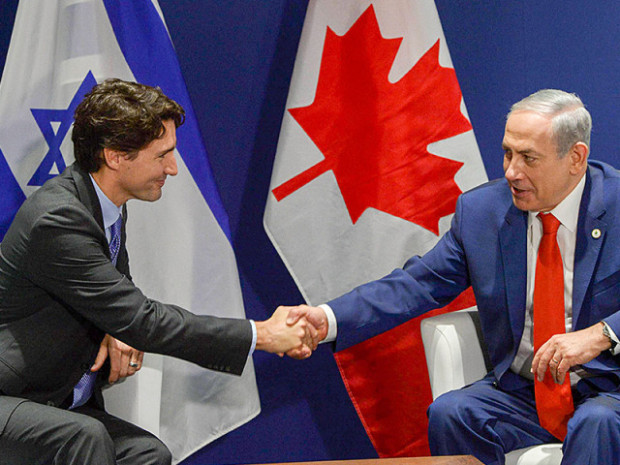
Canada Palestine Association has compiled a comprehensive look at the U.N. voting pattern of Canada from 2013-2018. This pattern, which was identical under both the Harper and Trudeau governments, highlights the anti-Palestinian racism in Canadian foreign policy. The new analysis details 16 U.N. resolutions on Palestine and the Arab world, and the respective votes from Canada that are overwhelmingly against with a few abstentions. This complements our earlier study of Canada’s voting on 4 other resolutions regarding Palestinian refugees (included at the end of this study), which showed the same pattern of hypocrisy and disrespect, and also augments a previous 2014 review.
One of the resolutions in our new study that we would like to highlight is: “Applicability of the Geneva Convention relative to the Protection of Civilian Persons in Time of War, of 12 August 1949, to the Occupied Palestinian Territory, including East Jerusalem, and the other occupied Arab territories”. Official Canadian policy states: “Canada does not recognize permanent Israeli control over territories occupied in 1967 (the Golan Heights, the West Bank, East Jerusalem and the Gaza Strip). The Fourth Geneva Convention applies in the occupied territories and establishes Israel’s obligations as an occupying power, in particular with respect to the humane treatment of the inhabitants of the occupied territories.” Despite this seemingly clear statement, which should be easy enough to interpret, every Canadian government in the study period voted against the resolution affirming the applicability of the Geneva Convention.
Additionally, Canada states it “recognizes the Palestinian right to self-determination”. Again, with the resolution relevant to this issue, Canada for the last 6 years has joined with a small number of countries and voted against.
This disconnect between what is said by the Canadian government and what they do is so obvious and jarring that they have even been obliged to add a new section to their policy statement explaining their votes at the U.N. Not surprisingly, they justify their actions by claiming that support for Palestinian rights is “one-sided”. They state that, “Canada advocates a fair-minded approach and rejects one-sided resolutions and any politicization of the issues”.
And its not as if their votes at the U.N. don’t reflect the actual policies that are being implemented on the ground. They do. And they are profoundly anti-Palestinian. Be it institutional support for products from illegal Israeli settlements, be it expanding and entrenching the Canada-Israel Free Trade Agreement, be it denouncing BDS at every turn, be it cementing Canada’s military ties with Israel – both the Trudeau and Harper governments have not missed a chance to further marginalize and demonize the Palestinian people and their narrative.
____________________________________________

1. Applicability of the Geneva Convention relative to the Protection of Civilian Persons in Time of War, of 12 August 1949, to the Occupied Palestinian Territory, including East Jerusalem, and the other occupied Arab territories

Canadian vote at the UN (under Harper)
A/RES/68/81 (2013) 169 in favour to 6 against (Canada, Federated States of Micronesia, Israel, Marshall Islands, Palau, United States), with 7 abstentions.
A/RES/69/91 (2014) 163 in favour to 7 against (Canada, Federated States of Micronesia, Israel, Marshall Islands, Nauru, Palau, United States), with 9 abstentions.

Canadian vote at the UN (under Trudeau)
A/RES/70/88 (2015) 163 votes in favour to 6 against (Canada, Israel, Marshall Islands, Federated States of Micronesia, Palau, United States), with 8 abstentions.
A/RES/71/96 (2016) 168 votes in favour to 6 against (Canada, Israel, Marshall Islands, Federated States of Micronesia, Palau, United States), with 6 abstentions.
A/RES/72/85 (2017) 157 votes in favour to 7 against (Canada, Israel, Marshall Islands, Federated States of Micronesia, Nauru, Palau, United States), with 10 abstentions.
A/RES/73/97 (2018) 158 in favour to 6 against (Canada, Israel, Marshall Islands, Federated States of Micronesia, Nauru, United States), with 14 abstentions.

2. The right of the Palestinian people to self-determination

Canadian vote at the UN (under Harper)
A/RES/68/154 (2013) 178 in favour to 7 against (Canada, Federated States of Micronesia, Israel, Marshall Islands, Nauru, Palau, United States), with 4 abstentions.
A/RES/69/165 (2014) 180 in favour to 7 against (Canada, Israel, Marshall Islands, Federated States of Micronesia, Nauru, Palau, United States), with 4 abstentions.

Canadian vote at the UN (under Trudeau)
A/RES/70/141 (2015) 177 in favour to 7 against (Canada, Israel, Marshall Islands, Federated States of Micronesia, Nauru, Palau, United States), with 4 abstentions.
A/RES/71/184 (2016) 177 in favour, to 7 against (Canada, Federated States of Micronesia, Israel, Marshall Islands, Nauru, Palau, United States), with 4 abstentions.
A/RES/72/160 (2017) 176 in favour to 7 against (Canada, Israel, Marshall Islands, Micronesia, Nauru, Palau, United States), with 4 abstentions.
A/RES/73/158 (2018) 172 in favour to 6 against (Canada, Israel, Marshall Islands, Federated States of Micronesia, Nauru, United States), with 11 abstentions.

3. Work of the Special Committee to Investigate Israeli Practices Affecting the Human Rights of the Palestinian People and Other Arabs of the Occupied Territories

Canadian vote at the UN (under Harper)

A/RES/68/80 (2013) 95 in favour to 8 against (Australia, Canada, Federated States of Micronesia, Israel, Marshall Islands, Palau, Panama, United States), with 75 abstentions.
A/RES/69/90 (2014) 88 in favour to 9 against (Australia, Federated States of Micronesia, Canada, Israel, Marshall Islands, Nauru, Palau, Panama, United States), with 79 abstentions.

Canadian vote at the UN (under Trudeau)

A/RES/70/87 (2015) 92 in favour to 9 against (Australia, Canada, Israel, Marshall Islands, Federated States of Micronesia, Nauru, Palau, Panama, United States), with 75 abstentions
A/RES/71/95 (2016) 91 in favour to 11 against including Canada, with 73 abstentions
A/RES/72/84 (2017) 83 in favour to 10 against (Australia, Canada, Guatemala, Honduras, Israel, Marshall Islands, Federated States of Micronesia, Nauru, Palau, United States), with 77 abstentions.
A/RES/73/96 (2018) 78 in favour to 10 against (Australia, Canada, Guatemala, Honduras, Israel, Marshall Islands, Federated States of Micronesia, Nauru, Solomon Islands, United States), with 84 abstentions.

4. Permanent sovereignty of the Palestinian people in the Occupied Palestinian Territory, including East Jerusalem, and of the Arab population in the occupied Syrian Golan over their natural resources

Canadian vote at the UN (under Harper)
A/RES/68/235 (2013) 168 in favour to 6 against (Canada, Federated States of Micronesia, Israel, Marshall Islands, Palau, United States), with 9 abstentions.
A/RES/69/241(2014) 165 in favour to 6 against (Canada, Israel, Marshall Islands, Micronesia (Federated States of), Palau, United States) with 9 abstentions.

Canadian vote at the UN (under Trudeau)
A/RES/70/225 (2015) 164 in favour to 5 against, (Canada, Israel, Marshall Islands, Federated States of Micronesia, United States), with 10 abstentions.
A/RES/71/247 (2016) 168 in favour and 7 against (Canada, Israel, Marshall Islands, Micronesia, Nauru, Palau, United States), with 11 abstentions.
A/RES/72/240 (2017) 163 in favour to 6 against (Canada, Israel, Marshall Islands, Micronesia, Nauru, United States), with 11 abstentions
A/RES/73/255 (2018) 159 in favour to 7 against (Canada, Israel, Kiribati, Marshall Islands, Micronesia, Nauru, United States), with 13 abstentions

5. Israeli settlements in the Occupied Palestinian Territory, including East Jerusalem, and the occupied Syrian Golan

Canadian vote at the UN (under Harper)
A/RES/68/82 (2013) 167 in favour to 6 against (Canada, Federated States of Micronesia, Israel, Marshall Islands, Palau, United States), with 9 abstentions.
A/RES/69/92 (2014) 159 in favour to 7 against (Canada, Federated States of Micronesia, Israel, Marshall Islands, Nauru, Palau, United States), with 12 abstentions.

Canadian vote at the UN (under Trudeau)

A/RES/70/89 (2015) 161 in favour to 7 against (Canada, Israel, Marshall Islands, Federated States of Micronesia, Nauru, Palau, United States), with 8 abstentions.
A/RES/71/97 (2016) 165 in favour to 6 against (Canada, Israel, Marshall Islands, Federated States of Micronesia, Palau, United States), with 7 abstentions.
A/RES/72/86 (2017) 155 in favour to 7 against (Canada, Israel, Marshall Islands, Federated States of Micronesia, Nauru, Palau, United States), with 12 abstentions.
A/RES/73/98 (2018) 154 votes in favour to 6 against (Canada, Israel, Marshall Islands, Federated States of Micronesia, Nauru, United States), with 15 abstentions.

6. Israeli practices affecting the human rights of the Palestinian people in the Occupied Palestinian Territory, including East Jerusalem

Canadian vote at the UN (under Harper)
A/RES/68/83 (2013) 165 in favour to 8 against (Australia, Canada, Federated States of Micronesia, Israel, Marshall Islands, Palau, Panama, United States), with 8 abstentions.
A/RES/69/93 (2014) 158 in favour to 8 against (Australia, Canada, Federated States of Micronesia, Israel, Marshall Islands, Nauru, Palau, United States), with 11 abstentions.

Canadian vote at the UN (under Trudeau)
A/RES/70/90 (2015) 158 in favour to 8 against (Australia, Canada, Israel, Marshall Islands, Federated States of Micronesia, Nauru, Palau, United States), with 10 abstentions.
A/RES/71/98 (2016) 162 votes in favour to 7 against (Australia, Canada, Israel, Marshall Islands, Federated States of Micronesia, Palau, United States), with 8 abstentions.
A/RES/72/87 (2017) 153 in favour to 8 against (Australia, Canada, Israel, Marshall Islands, Federated States of Micronesia, Nauru, Palau, United States), with 10 abstentions.
A/RES/73/99 (2018) adopted it by a recorded vote of 152 in favour to 8 against (Australia, Canada, Israel, Marshall Islands, Federated States of Micronesia, Nauru, Solomon Islands, United States), with 13 abstentions.

7. Jerusalem

Canadian vote at the UN (under Harper)
A/RES/68/16 (2013) 162 in favour to 6 against (Canada, Federated States of Micronesia, Israel, Marshall Islands, Palau, United States), with 8 abstentions.
A/RES/69/24 (2014) 144 in favour to 6 against (Canada, Israel, Marshall Islands, Micronesia (Federated States of), Palau and the United States), with 10 abstentions.

Canadian vote at the UN (under Trudeau)
A/RES/70/16 (2015) 153 votes in favour to 7 against (Canada, Israel, Marshall Islands, Federated States of Micronesia, Nauru, Palau, United States), with 8 abstentions.
A/RES/71/25 (2016) 149 in favour to 7 against (Canada, Federated States of Micronesia, Israel, Marshall Islands, Nauru, Palau, United States), with 8 abstentions.
A/RES/72/15 (2017) 151 in favour to 6 against (Canada, Federated States of Micronesia, Israel, Marshall Islands, Nauru, United States), with 9 abstentions.
A/RES/73/22 (2018) 148 in favour to 11 against including Canada with 14 abstentions.

8. Peaceful settlement of the question of Palestine


Canadian vote at the UN (under Harper)

A/RES/68/15 (2013) 165 in favour to 6 against (Canada, Israel, Federated States of Micronesia, Marshall Islands, Palau, United States), with 6 abstentions.
A/RES/69/23 (2014) 148 delegates in favour, 6 against (Canada, Israel, Marshall Islands, Micronesia (Federated States of), Palau and United States) and 8 abstentions.

Canadian vote at the UN (under Trudeau)

A/RES/70/15 (2015) 155 in favour to 7 against (Canada, Israel, Marshall Islands, Federated States of Micronesia, Nauru, Palau, United States), with 7 abstentions.
A/RES/71/23 (2016) 153 in favour to 7 against (Canada, Federated States of Micronesia, Israel, Marshall Islands, Nauru, Palau, United States), with 7 abstentions.
A/RES/72/14 (2017) 157 in favour to 7 against (Canada, Federated States of Micronesia, Israel, Marshall Islands, Nauru, Solomon Islands, United States) with 8 abstentions.
A/RES/73/19 (2018) 156 in favour to 8 against (Australia, Canada, Israel, Kiribati, Marshall Islands, Federated States of Micronesia, Nauru, United States) with 12 abstentions.

9. Special information programme on the question of Palestine of the Department of Public Information of the Secretariat

Canadian vote at the UN (under Harper)
A/RES/68/14 (2013) 163 in favour to 7 against (Australia, Canada, Federated States of Micronesia, Israel, Marshall Islands, Palau, United States), with 7 abstentions.
A/RES/69/22 (2014) 147 in favour to 7 against (Australia, Canada, Israel, Marshall Island, Federated States of Micronesia, Palau, United States), with 9 abstentions.

Canadian vote at the UN (under Trudeau)
A/RES/70/14 (2015) 155 in favour to 7 against (Australia, Canada, Israel, Marshall Islands, Federated States of Micronesia, Palau, United States), with 7 abstentions.
A/RES/71/22 (2016) 153 votes in favour to 7 against (Australia, Canada, Federated States of Micronesia, Israel, Marshall Islands, Palau, United States), with 7 abstentions.
A/RES/72/12 (2017) 155 in favour to 8 against (Australia, Canada, Federated States of Micronesia, Israel, Marshall Islands, Nauru, Solomon Islands, United States), with 8 abstentions.
A/RES/73/20 (2018) 152 in favour to 8 against (Australia, Canada, Guatemala, Israel, Marshall Islands, Federated States of Micronesia, Nauru, United States) with 14 abstentions

10. Division for Palestinian Rights of the Secretariat

Canadian vote at the UN (under Harper)
A/RES/68/13 (2013) 108 in favour to 7 against (Australia, Canada, Federated States of Micronesia, Israel, Marshall Islands, Palau, United States), with 59 abstentions
A/RES/69/21 (2014) 91 in favour to 7 against (Australia, Canada, Israel, Marshall Island, Federated States of Micronesia, Palau, United States), with 59 abstentions.

Canadian vote at the UN (under Trudeau)

A/RES/70/13 (2015) 99 votes in favour to 8 against (Australia, Canada, Israel, Marshall Islands, Federated States of Micronesia, Nauru, Palau, United States), with 59 abstentions.
A/RES/71/21 (2016) 98 in favour to 9 against (Australia, Canada, Federated States of Micronesia, Guatemala, Israel, Marshall Islands, Nauru, Palau, United States), with 57 abstentions.
A/RES/72/11 (2017) 100 in favour to 10 against including Canada, with 59 abstentions
A/RES/73/21 (2018) 96 in favour to 13 against including Canada with 64 abstentions

11. Committee on the Exercise of the Inalienable Rights of the Palestinian People

Canadian vote at the UN (under Harper)
A/RES/68/12 (2013) 110 in favour to 7 against (Australia, Canada, Federated States of Micronesia, Israel, Marshall Islands, Palau, United States), with 56 abstentions
A/RES/69/20 (2014) 94 in favour to 7 against (Australia, Canada, Israel, Marshall Island, Federated States of Micronesia, Palau, United States), with 56 abstentions.

Canadian vote at the UN (under Trudeau)

A/RES/70/12 (2015) 102 in favour to 8 against (Australia, Canada, Israel, Marshall Islands, Federated States of Micronesia, Nauru, Palau, United States), with 57 abstentions
A/RES/71/20 (2016) 100 in favour to 9 against (Australia, Canada, Federated States of Micronesia, Guatemala, Israel, Marshall Islands, Nauru, Palau, United States), with 55 abstentions
A/RES/72/13 (2017) 103 in favour to 10 against including Canada, with 57 abstentions.
A/RES/73/18 (2018) 100 in favour to 12 against including Canada with 62 abstentions.

12. The Syrian Golan

Canadian vote at the UN (under Harper)
A/RES/68/17 (2013) 112 in favour to 6 against ( Canada, Israel, Marshall Island, Palau, United States) with 58 abstentions.
A/RES/69/25 (2014) 99 in favour to 6 against (Canada, Israel, Marshall Islands, Micronesia, Palau, and the United States), with 57 abstaining.

Canadian vote at the UN (under Trudeau)
A/RES/70/17 (2015) 105 in favour to 6 against (Canada, Israel, Marshall Islands, Federated States of Micronesia, Palau, United States), with 56 abstentions.
A/RES/71/24 (2016) 103 in favour to 6 against (Canada, Federated States of Micronesia, Israel, Marshall Islands, Palau, United States), with 56 abstentions
A/RES/72/16 (2017) 105 in favour to 6 against (Canada, Federated States of Micronesia, Israel, Marshall Islands, United Kingdom, United States) with 58 abstentions
A/RES/73/23 (2018) 99 in favour to 10 against including Canada with 66 abstentions.

13. Oil slick on Lebanese shores


Canadian vote at the UN (under Harper)

A/RES/68/206 (2013) 169 in favour to 6 against (Australia, Canada, Federated States of Micronesia, Israel, Palau, United States), with 4 abstentions.
A/RES/69/212 (2014) 170 in favour and 6 against (Australia, Canada, Israel, Marshall Islands, Micronesia (Federated States of), United States), and 3 abstentions.

Canadian vote at the UN (under Trudeau)
A/RES/70/194 (2015) 171 in favour to 6 against (Australia, Canada, Israel, Marshall Islands, Federated States of Micronesia, United States), with 3 abstentions.
A/RES/71/218 (2016) 166 in favour to 8 against (Australia, Canada, Israel, Marshall Islands, Federated States of Micronesia, Nauru, Palau, United States), with 7 abstentions.
A/RES/72/209 (2017) 163 in favour to 7 against (Australia, Canada, Israel, Marshall Islands, Micronesia, Nauru, United States), with 9 abstentions.
A/RES/73/224 (2018) 166 in favour to 7 against (Australia, Canada, Israel, Marshall Islands, Micronesia, Nauru, United States), with 7 abstentions.

14. The occupied Syrian Golan

Canadian vote at the UN (under Harper)

A/RES/68/84 (2013) 169 in favour to 1 against (Israel), with 12 abstentions including Canada.
A/RES/69/94 (2014) 162 in favour to 1 against (Israel), with 15 abstentions including Canada.

Canadian vote at the UN (under Trudeau)

A/RES/70/91 (2015) 160 in favour to 1 against (Israel), with 16 abstentions including Canada.
A/RES/71/99 (2016) 163 in favour to 1 against (Israel), with 15 abstentions including Canada.
A/RES/72/88 (2017) 151 in favour to 2 against, with 20 abstentions including Canada.
A/RES/73/100 (2018) 149 in favour to 2 against (Israel, United States), with 22 abstention including Canada.

15. The risk of nuclear proliferation in the Middle East

Canadian vote at the UN (under Harper)

A/RES/68/65 (2013) 169 in favour to 5 against (Canada, Federated States of Micronesia, Israel, Palau, United States), with 6 abstentions (Australia, Cameroon, Cote d’Ivoire, Ethiopia, India, Panama).
A/RES/69/78 (2014) 161 in favour to 5 against (Canada, Federated States of Micronesia, Israel, Palau, United States), with 18 abstentions.

Canadian vote at the UN (under Trudeau)
A/RES/70/70 (2015) 157 in favour to 5 against (Canada, Israel, Federated States of Micronesia, Panama, United States), with 20 abstentions.
A/RES/71/83 (2016) 157 in favour to 5 against (Canada, Federated States of Micronesia, Israel, Palau, United States), with 22 abstentions
A/RES/72/67 (2017) 157 in favour to 5 against (Canada, Federated States of Micronesia, Israel, Palau, United States), with 20 abstentions
A/RES/73/83 (2018) By a recorded vote of 158 in favour to 6 against (Canada, Federated States of Micronesia, Israel, Marshall Islands, Palau, United States), with 21 abstentions.

16. Comprehensive, just and lasting peace in the Middle East (new resolution introduced in 2018)

Canadian vote at the UN (under Trudeau)
A/RES/73/89 (2018) 156 in favour to 6 against (Australia, Israel, Liberia, Marshall Islands, Nauru, United States), with 12 abstentions including Canada

On resolutions relating to Palestinian refugees

17. Assistance to Palestine refugees

Canadian vote at the UN (under Harper)
A/RES/68/76 (2013), 173 in favour to 1 against ( Israel) with 8 abstentions including Canada
A/RES/69/86 (2014), 163 in favour to 1 against (Israel) with 10 abstentions including Canada

Canadian vote at the UN (under Trudeau)
A/RES/70/83 (2015), 167 in favour to 1 against (Israel) with 11 abstentions including Canada
A/RES/71/91 (2016), 167 in favour to 1 against (Israel) with 9 abstentions including Canada
A/RES/72/80 (2017), 162 in favour to 1 against (Israel) with 12 abstentions including Canada
A/RES/73/92 (2018), 163 in favour to 2 against (Israel, United States) with 13 abstentions including Canada

18. Persons displaced as a result of the June 1967 and subsequent hostilities

Canadian vote at the UN (under Harper)
A/RES/68/77 (2013), 170 in favour to 6 against including Canada with 6 abstentions
A/RES/69/87 (2014), 165 in favour to 7 against including Canada with 6 abstention

Canadian vote at the UN (under Trudeau)
A/RES/70/84 (2015), 164 in favour to 7 against including Canada with 7 abstentions
A/RES/71/92 (2016), 166 in favour to 6 against including Canada with 6 abstentions
A/RES/72/81 (2017), 158 in favour to 7 against including Canada with 10 abstentions
A/RES/73/93 (2018), 155 in favour to 6 against including Canada with 13 abstentions

19. Operations of the United Nations Relief and Works Agency for Palestine Refugees in the Near East

Canadian vote at the UN (under Harper)
A/RES/68/78 (2013), 170 in favour to 6 against including Canada with 6 abstentions
A/RES/69/88 (2014), 166 in favour to 6 against including Canada with 6 abstentions

Canadian vote at the UN (under Trudeau)
A/RES/70/85 (2015), 169 in favour to 6 against including Canada with 5 abstentions
A/RES/71/93 (2016), 167 votes in favour to 6 against including Canada with 5 abstentions
A/RES/72/82 (2017), 162 in favour to 6 against including Canada with 7 abstentions
A/RES/73/94 (2018), 159 in favour to 5 against including Canada with 12 abstentions

20. Palestine refugees’ properties and their revenues

Canadian vote at the UN (under Harper)
A/RES/68/79 (2013), 172 in favour to 6 against including Canada with 5 abstentions
A/RES/69/89 (2014), 165 in favour to 7 against including Canada with 6 abstentions

Canadian vote at the UN (under Trudeau)
A/RES/70/86 (2015), 167 in favour to 7 against including Canada with 4 abstentions
A/RES/71/94 (2016), 165 in favour to 7 against including Canada with 5 abstentions
A/RES/72/83 (2017), 159 in favour to 7 against including Canada with 9 abstentions
A/RES/73/95 (2018), 156 in favour to 6 against including Canada with 14 abstentions

The NDP responds to I Vote Palestine questions

Text version of the New Democratic Party NDP response to the I Vote Palestine letter with the nine questions sent by CPA (in the name of 21 organizations) to all party leaders.

Oct. 8, 2019
NDP Response: Canada Palestine Association

We stand for freedom, justice and equality for the Palestinian people, and
we ask you to clarify where you and your party stand on the following:

* Do you support Palestinian human and national rights including the inalienable right to self-determination?
A. Yes, we are committed to the protection of Palestinian human rights, including the inalienable right to self-determination.

* Do you oppose Israeli ethnic cleansing, war crimes and apartheid?
A. We oppose all human-rights abuses committed by Israel, including killings, arbitrary and abusive detention, forced displacement, restrictions on movement, the expansion of illegal settlements, and all other human-rights abuses.

* Do you recognize the fundamental rights of the Arab-Palestinian citizens of Israel to full equality?
A. Yes, we stand for full equality of Arab Israelis and against the discrimination that exists against them in Israel today.

* Do you respect, protect and promote the rights of Palestinian refugees to return to their homes and properties as stipulated in UN resolution 194?
A. We fully support UN resolutions with respect to Israel and Palestine, including UN General Assembly resolution 194.

* Do you support ending Israeli occupation and colonization of all Arab lands and dismantling the Wall?
A. Yes. Canada should play a more active role in calling for the end of Israeli occupation of Palestinian land.

* Do you oppose Canadian tax-deductible status for the Jewish National Fund JNF, HESEG Foundation and all Zionist organizations that are disguised as charities while supporting the Israeli military and settlements?
A. These are matters for the CRA to determine. Having said that, NDP MP Pierre-Luc Dusseault sponsored a parliamentary petition calling on the Minister of National Revenue to revoke JNF Canada’s charitable status if found to be in violation of the Income Tax Act and CRA guidelines and policies.

* Do you recognize the rights of Canadians to support the Boycott Divestment and Sanctions BDS movement as a non-violent strategy to force Israel to abide by UN resolutions and all international humanitarian laws?
A. Yes.

* Do you oppose condemning or criminalizing people or organizations who support the BDS Movement?
A. Yes.

* Do you oppose the anti-Palestinian, anti-democratic and politically charged IHRA definition of anti-Semitism?
A. We believe the government of Canada must have a clear definition of anti-Semitism so we can better gauge, report, and work towards ending it. We have some concerns that the IHRA definition and its associated examples could undermine those who wish to speak out in favour of the human rights of Palestinians.

Canada’s Betrayal of the Palestinian Refugees

We will Regain our Rights
“We Will Regain Our Rights”

By: Hanna Kawas

Zionism is a settler colonialist movement that not only committed genocide against the indigenous people of Palestine, it also uprooted them from their homeland.

My experience as a Palestinian refugee started when I was in my mother’s womb, as Zionist terrorist groups chased my parents out of Yafa (Jaffa) in 1948 where my father was working and my mom was about to deliver their first child. They fled to go live in our hometown of Bethlehem. We were displaced again, a second time, after the Israeli aggression of June 5, 1967. Those pictures of young and old going across what was then called the “Allenby Bridge” was my lived experience.

Since I was a young man, I always dreamed and hoped that I will return to live in my hometown where I was born and raised. In diaspora I still hold on to the deed to our family property in Bethlehem, passed down to me from my grandfather Elias. The simple reason I am not there is that Israel refuses to allow Palestinian refugees to return to their ancestral land and properties, in violation of UN resolution 194. Further relating to my situation, Israel also refuses to allow “Persons displaced as a result of the June 1967 and subsequent hostilities” to return, again according to a UN resolution that is passed annually with a large majority. Canada has also consistently voted against this specific resolution, even though Canada’s stated foreign policy hypocritically claims that “Canada does not recognize permanent Israeli control over territories occupied in 1967 … The Fourth Geneva Convention applies in the occupied territories and establishes Israel’s obligations as an occupying power…”

Israel not only blocks Palestinian refugees from returning, but according to a recent report, studied how to push them out in the first place (otherwise known as planned ethnic cleansing):
“Newly-uncovered documents reveal how Israel established the ‘Professors Committee’ in the days following the occupation to devise policies to pacify the Palestinians and make them leave the West Bank and Gaza permanently.”

I expect such arrogant flaunting of UN resolutions from the supremacist regime Israel that uprooted my people and committed genocide against my nation. But far more upsetting and dehumanizing are the positions of Canada, that played and continues to play a pivotal role in Palestinian dispossession.

The Balfour declaration gave initial British support and the green light for Zionist colonization. Following are just two examples of Canada’s early support to this movement; accordingly, Canada carries direct and moral responsibly for the Palestinian refugee tragedy.

• The late Canadian Prime Minister Mackenzie King who “was effusive with praise for Zionism when he addressed the Ottawa convention of the Zionist Federation of Canada on 4 July 1922…he applauded Britain efforts (Balfour Declaration) in aid of the Zionist cause.” (Canada and the birth of Israel, David J. Bercuson, page13.

• Lester B. Pearson, Canada’s under secretary of state, was instrumental in ensuring the passage of the U.N. Partition Resolution in 1947 and Supreme Court of Canada Justice, Ivan C. Rand, was a central figure in drafting it… “The Zionists were so grateful to Canada and to Mr. Pearson for the part he played in the whole process that they called him ‘the Balfour of Canada’.” Report of the Canadian Standing Senate Committee on Foreign Affairs published June 1985, page 49.

On May 11/1949, Canada co-sponsored the U.N. General Assembly resolution 273(111) to admit Israel as a state to the U.N. That resolution stated: ” Recalling its resolution of 29 November 1947 (the Partition Plan) and 11 December 1948 (the Right of Return), and taking note of the declaration and explanation made by the representative of the government of Israel before the ad hoc Political committee in respect of the implementation of the said resolutions (my emphasis), the General Assembly … decides to admit Israel into the membership of the United Nations.”

Israel never implemented the Partition Plan nor the Right of Return. Clearly seventy years later, Canada never cared about the implementation of these resolutions, it only cared about admitting Israel to the UN and implementation of the Zionist agenda.

Since the Nakba of 1947/1948, Canada has not missed an opportunity to liquidate the Palestinian Right of Return. Its main objective has always been to “resettle” Palestinian refugees; its contributions to the UNRWA were and are politically motivated, and have always been in the service of western imperial designs. As early as March 25, 1955, before the House of Commons, Leader of the Conservative Opposition John Diefenbaker clearly stated:
“… certainly there is no sorer spot than these camps which, as one visits them and leaves them, cannot help but impress one with the awfulness of the situation in which these people find themselves. The minister mentioned Canada’s contribution, and I think that is one contribution that does leave an impression upon the people who receive it. In addition, it is building a bulwark against the spread of communism in these areas

Eventually realizing that Canada should “cover its tracks” on its policy of resettling Palestinian refugees, the Canadian Standing Senate Committee on Foreign Affairs’ “Report on Canada’s Relations with the countries of the Middle East and North Africa” (June 1985, under the heading “Refugees”, page 115) stated: “The committee would not like to see Canada introduce a ‘designated class’ program for Palestinians as this would be perceived as a political gesture, and Canada’s intentions might be misunderstood in that politically sensitive part of the world.”

This duplicitous policy has continued in the intervening years; here are two examples of the recurring theme of “resettling” Palestinians with a Canadian connection:

• On Jan. 18/ 2001, Agence France Presse(AFP) reported that Palestinian demonstrators in Balata refugee camp near Nablus denounced Canada and Australia for their offer to RESETTLE the Palestinian refugees, and that they burned an effigy of then Foreign Minister John Manley during this protest.

• And most recently, on Sep.4, 2019 the Lebanese paper Al Akbar reported that Canada “has reached an understanding with the United States that it will receive 100,000 Palestinians: 40,000 from Lebanon and another 60,000 from Syria.” Sources in Lebanon were quoted as saying that part of the Trump administration’s ‘Deal of the Century’ aims “to resettle between 75,000 and 100,000 Palestinians in Lebanon and displace the rest to more than one country.” Understandably, the Liberal Canadian government denied it.

Some voices in the Palestinian and Arab community are trying to white-wash the record of the governing Liberal party on Palestinian refugees by highlighting the example of their continued financial support to UNRWA.

This position was also advanced by Canadians for Justice and Peace in the Middle East (CJPME) when they issued a “2019 Elections Guide” which includes their evalution of major Canadian parties on 13 subjects including “Support for Palestinian Refugees”. They gave the Liberal party a “B+” on this subject, with this explanation:
“Harper had also cancelled its funding to UNRWA. Under the Trudeau government, however, this funding has been reinstated. While the Liberals have so far maintained their funding commitments to UNRWA, they have done little to work toward a permanent solution for Palestinian refugees. It is for this reason that the Liberals received a B+.”

Such a position woefully minimizes the dangers of the voting pattern of the Canadian government under the Liberal Party at the UN General Assembly, votes that accurately demonstrate their true position on Palestine. In fact, for the last four years, that pattern was remarkably similar to the Conservative Party “Shameful Record on Palestine”.

Liberal MP Anthony Housefather even bragged about the Liberal record saying: “We have voted against 87% of the resolutions singling out Israel for condemnation at the General Assembly versus 61% for the Harper government…” (Details on the voting records of Harper and Trudeau governments here.)

It is wrong to ignore the Canadian government’s political betrayal of Palestinian refugees as if our cause is simply a charity one. The Palestinian people rejected the Trump’s administration’s $50 billion because it was meant to liquidate national rights. Financial aid to Palestinians is a positive thing only when it is does not accompany the sabotage of their inalienable rights.

The Liberal government’s commitment of $110 million to the UNRWA over four years should not be allowed to buy loyalty to a government that does not miss an opportunity to support Israel and works at every turn to liquidate our legitimate rights and struggles. The Palestinian Right of Return is not for sale the same way Palestine is not for sale!

Finally, as the immortal Palestinian poet Mahmoud Darwish concluded in his masterpiece “Identity Card”: “Beware, beware of my hunger and anger”.

Published in Palestine Chronicle

Another version published in Mondoweiss

Canada’s Shameful Record on Palestinian Refugees

Canadian Voting Pattern on Palestinian Refugees by the Harper and Trudeau Governments at the UN 2013-2018
Organized by subject heading

Assistance to Palestine refugees

Canadian vote at the UN (under Harper)
A/RES/68/76 (2013), 173 in favour to 1 against ( Israel) with 8 abstentions including Canada
A/RES/69/86 (2014), 163 in favour to 1 against (Israel) with 10 abstentions including Canada

Canadian vote at the UN (under Trudeau)
A/RES/70/83 (2015), 167 in favour to 1 against (Israel) with 11 abstentions including Canada
A/RES/71/91 (2016), 167 in favour to 1 against (Israel) with 9 abstentions including Canada
A/RES/72/80 (2017), 162 in favour to 1 against (Israel) with 12 abstentions including Canada
A/RES/73/92 (2018), 163 in favour to 2 against (Israel, United States) with 13 abstentions including Canada

Persons displaced as a result of the June 1967 and subsequent hostilities

Canadian vote at the UN (under Harper)
A/RES/68/77 (2013), 170 in favour to 6 against including Canada with 6 abstentions
A/RES/69/87 (2014), 165 in favour to 7 against including Canada with 6 abstention

Canadian vote at the UN (under Trudeau)
A/RES/70/84 (2015), 164 in favour to 7 against including Canada with 7 abstentions
A/RES/71/92 (2016), 166 in favour to 6 against including Canada with 6 abstentions
A/RES/72/81 (2017), 158 in favour to 7 against including Canada with 10 abstentions
A/RES/73/93 (2018), 155 in favour to 6 against including Canada with 13 abstentions

Operations of the United Nations Relief and Works Agency for Palestine Refugees in the Near East

Canadian vote at the UN (under Harper)
A/RES/68/78 (2013), 170 in favour to 6 against including Canada with 6 abstentions
A/RES/69/88 (2014), 166 in favour to 6 against including Canada with 6 abstentions

Canadian vote at the UN (under Trudeau)
A/RES/70/85 (2015), 169 in favour to 6 against including Canada with 5 abstentions
A/RES/71/93 (2016), 167 votes in favour to 6 against including Canada with 5 abstentions
A/RES/72/82 (2017), 162 in favour to 6 against including Canada with 7 abstentions
A/RES/73/94 (2018), 159 in favour to 5 against including Canada with 12 abstentions

Palestine refugees’ properties and their revenues

Canadian vote at the UN (under Harper)
A/RES/68/79 (2013), 172 in favour to 6 against including Canada with 5 abstentions
A/RES/69/89 (2014), 165 in favour to 7 against including Canada with 6 abstentions

Canadian vote at the UN (under Trudeau)
A/RES/70/86 (2015), 167 in favour to 7 against including Canada with 4 abstentions
A/RES/71/94 (2016), 165 in favour to 7 against including Canada with 5 abstentions
A/RES/72/83 (2017), 159 in favour to 7 against including Canada with 9 abstentions
A/RES/73/95 (2018), 156 in favour to 6 against including Canada with 14 abstentions

IHRA Definition is an Assault on the Palestinian Community

null
Update:
In a vote of 6-5 (the dissenting 5 were all NPA councillors), the … Read more

null
Update:
In a vote of 6-5 (the dissenting 5 were all NPA councillors), the Vancouver City Council did not adopt the motion and referred it to committee for recommendations on how to combat all forms of racism. Councillor Michael Wiebe was quoted as saying that “we need a policy that tackles all forms of racism, including white supremacy. It’s too important to get this wrong.”
For detailed background on the campaign and the vote, check the Mondoweiss article:
In victory for activists, Vancouver city council votes against adopting IHRA antisemitism definition
By Marion Kawas.
——————————–
The following letter was sent today to Vancouver City Councillors and Mayor, regarding an upcoming and dangerous motion to adopt the IHRA definition of anti-Semitism. We have been moved and encouraged by the grassroots opposition to this motion from a broad cross-section of people in Vancouver, and encourage everyone to send an email to Council or sign up to be a speaker (instructions here). A special thanks to COPE, who have endorsed the campaign against the motion and asked everyone to help in defeating it. Join us to tell Vancouver City Council to not set “…a precedent as being the first municipal council in Canada to be openly complicit in chilling free speech, eviscerating the Palestinian people’s narrative and promoting anti-Palestinian racism.”

Dear Councillor:

I am writing to you as a Canadian Palestinian and the chairperson of Canada Palestine Association-Vancouver. I have lived much of my adult life in Greater Vancouver after first immigrating here in 1974, and like the rest of my community, have struggled to live in dignity while navigating and going beyond the difficulties of immigrant life. My daughter and granddaughter were both raised here, and currently reside in East Vancouver.
I’m asking you to oppose the motion, ‘Combatting Antisemitism in Vancouver’, by councillor Kirby-Yung, coming before council on July 23. This motion if passed will make us feel unwelcome in this city and tell us our voices are not valued.
As Palestinians, most of us are not here by choice; we have been dispossessed from our ancestral homeland and forced to find refuge wherever we could. We have been cast to the four corners of the world; my own extended family has members in multiple countries. I hold the deed to our family’s property in Bethlehem, my birthplace; but due to Israeli policies that are supported by Canada, in flagrant violation of the UN resolution reaffirmed annually, I am not allowed to live there. Why? Because I am a Palestinian Christian and a 1967 war refugee. This motion if passed will tell me that I am not allowed to criticize the very ideology, Zionism, that resulted in the dispossession of my family and my nation; that is both unfair and equally racist in itself.
You may have been led to believe that this motion will aid in the struggle against anti-Semitism. What you may not have heard is that this motion will also end up contributing to another form of racism, anti-Palestinian racism. It is flawed to claim that you are fighting against one form of racism by reinforcing another one; we must unite to fight against all forms of racism.
You may have also been told that this is just a “non-legally” binding motion but it has been made clear that passing this motion is just the beginning of a process. Bnai Brith has already put on record that the Canadian government’s initial adoption was a good first step, but must be followed by enforcement protocols. “We will be looking for concrete actions, however, to give its implementation substance and meaning. B’nai Brith will be writing to (Pablo) Rodriguez and his colleagues to reiterate our specific ideas on how that can be done.”
This is the same B’nai Brith that slandered me, along with my Jewish friend Sid Shniad, in its 2016 yearly report on Antisemitic Incidents (Academic Antisemitism section), and completely misrepresented what was said at a joint workshop we presented in October 2016. The workshop was part of a broader Genocide Conference at SFU Vancouver Campus and was delivered to a full house, despite pressure to have it cancelled. This is just one local example of erroneous judgement on what constitutes anti-Semitism and demonstrates how legitimate political discourse about Israel is targeted.
As the BC Civil Liberties Association noted in their opposition to the IHRA definition: “We fear that if adopted, the IHRA definition will serve to severely chill political expressions of criticism of Israel as well as support for Palestinian rights.”
Most of our community is already terrorized by anti-immigrant, anti-Palestinian or anti-Muslim rhetoric. Some are even hesitant to admit their heritage to others, afraid that it may hinder their job prospects or relationships. Passing this dangerous and unnecessary motion will only further that alienation; what a crime that a child has to see their parent hide from the world who they are and where they came from. Not from shame, but from fear.
If this IHRA definition is passed by Council, and Palestinians in the future are told to limit or dismiss their lived history, then our worst fears have been realized. Vancouver City Council will then go down in history as setting a precedent as being the first municipal council in Canada to be openly complicit in chilling free speech, eviscerating the Palestinian people’s narrative and promoting anti-Palestinian racism.

Hanna Kawas
Chair, Canada Palestine Association